Home
Shop
Wishlist0
ONE DAY. ONE EXCLUSIVE DISCOUNT. 25% DISCOUNT. EVERY TUESDAY.
Why does my vape taste Metallic

Why Does My Vape Taste Metallic

Why does my vape taste metallic is a common and often overlooked question. In most cases, it points to something happening at the coil, not the e-liquid itself.

This guide breaks down the most likely causes and what to check first. If your current coil is the culprit, our shop has replacement options ready.

Why Does My Vape Taste Metallic? The Coil Is Usually the Cause

Most disposable and refillable coils use metals like Kanthal or nichrome. Under normal conditions, e-liquid keeps that metal cool as it vaporizes.

If the wick runs dry, even briefly, the coil’s metal can overheat. That overheating is a common source of a sharp, metallic taste.

A Worn-Out Coil Often Signals the End of Its Life

Coils naturally degrade with regular use. As they age, they can start producing a metallic or tinny taste even under normal conditions.

If you’ve had the same coil for one to three weeks and taste starts shifting, replacement usually resolves the issue.

Why does my vape taste Metallic

Why Does My Vape Taste Metallic Right After Refilling?

A metallic taste appearing right after refilling can point to residue buildup on the coil from a previous e-liquid.

Cleaning the tank thoroughly before refilling, or switching to a fresh coil, often eliminates this taste quickly.

Vaper’s Tongue Can Play a Role Too

Sometimes the issue isn’t the device at all. Vaper’s tongue, a temporary loss of taste sensitivity, can make flavors taste flat or oddly metallic.

Switching flavors briefly or taking a short break often helps restore normal taste perception.

Why does my vape taste Metallic

What Research Says About Metal in Vapor

A study from Johns Hopkins Bloomberg School of Public Health found that a significant number of e-cigarette devices produced aerosols containing measurable levels of metals including lead, chromium, and nickel.

Researchers noted that heating coils are a likely source of this metal transfer, since coils are commonly made from these materials.

This doesn’t mean every metallic taste signals a health concern, but it’s a reasonable reminder that coil condition matters beyond flavor alone.

Why Does My Vape Taste Metallic With High Wattage?

Running a coil above its rated wattage heats the metal faster than the e-liquid can properly vaporize.

This imbalance can intensify a metallic taste, particularly if it happens alongside a dry or under-saturated wick.

Quick Checks to Try First

Work through these steps before assuming the device is defective:

  • Check how long you’ve had the current coil installed
  • Make sure the wick is fully saturated before vaping
  • Try a different flavor to rule out vaper’s tongue
  • Confirm your wattage matches the coil’s rated range
  • Clean the tank if the taste appeared after refilling

Frequently Asked Questions

Should I stop using a device if it tastes metallic?
If replacing the coil doesn’t resolve it, discontinuing use of that specific device is a reasonable precaution.

Can e-liquid itself cause a metallic taste?
It’s less common, but certain flavor compounds can interact with metal components under some conditions.

How often should I replace my coil to avoid this?
Most coils need replacing every one to three weeks, depending on usage and e-liquid type.

Dealing with a coil that just won’t taste right? Get in touch with our team and we’ll help you find a replacement.
How to troubleshoot Disposable vapes

How To Troubleshoot Disposable Vapes

How to troubleshoot disposable vapes comes down to working through a few checks in order. Most issues resolve within the first two or three steps.

This guide walks through that process step by step, so you can pinpoint the problem quickly. If the device turns out to be a dud, our shop has reliable replacements ready.

How to Troubleshoot Disposable Vapes: Start With the Airflow

Check the intake holes on the bottom or sides of the device first. Packaging stickers sometimes cover these holes on a brand-new device.

Clear any visible lint or debris with a toothpick. Avoid pushing anything directly toward the coil while doing this.

Take a slow, steady draw after clearing the airflow. If vapor appears, the blockage was the issue.

How to troubleshoot Disposable vapes

Check for Trapped Air Bubbles

If airflow is clear but vapor still isn’t coming through, an air bubble may be blocking e-liquid from reaching the coil.

Tap the device gently against your palm a few times. This often helps redistribute the liquid toward the wick.

Let the device sit upright for a minute or two afterward, then try again.

How to Troubleshoot Disposable Vapes When It’s Cold

Cold temperatures thicken e-liquid, which can prevent it from properly saturating the wick.

Warm the device between your hands for a few minutes if it’s been sitting in a cold car or outdoors.

Try a draw again once the device feels closer to room temperature.

Inspect for Leaking

If e-liquid has leaked, wipe the device down and check its storage position. Devices designed to sit upright can leak if stored on their side.

Move the device to an upright position and let it settle for a few minutes before using it again.

If leaking happened right out of the packaging, that generally points to a manufacturing defect rather than a fixable issue.

Test the Battery

Take a draw and watch for an LED light, if your device has one. A blinking or dim light often signals a low or dying battery.

If your device is rechargeable, plug it in and wait for the indicator to confirm a full charge before testing it again.

The Consumer Product Safety Commission notes that damaged lithium-ion batteries can overheat, so stop using the device immediately if it feels unusually hot during this step.

Taste Test for Burnt Flavor

If you get vapor but the taste is harsh or burnt, the wick has likely dried out and scorched.

This usually means the device has reached the end of its usable life, since a disposable’s burnt wick can’t be repaired.

How to troubleshoot Disposable vapes

How to Troubleshoot Disposable Vapes: When Nothing Works

If you’ve worked through airflow, battery, and temperature checks with no result, the device likely has a manufacturing defect.

Document the issue with a photo or short video, and contact the retailer promptly rather than attempting to open the device yourself.

Quick Troubleshooting Checklist

Run through these checks in order for the fastest results:

  • Clear the airflow holes and mouthpiece
  • Tap the device to dislodge air bubbles
  • Warm the device if it’s been in the cold
  • Check for leaks and correct the storage position
  • Test the battery and watch the LED indicator
  • Taste-test for a burnt or scorched flavor

Frequently Asked Questions

How long should I wait after warming a cold device?
A few minutes is usually enough before the e-liquid returns to a workable consistency.

Can I open a disposable vape to troubleshoot it further?
No. Manufacturers don’t design these devices to be opened, and doing so can create a safety risk.

When should I stop troubleshooting and contact the retailer?
Once you’ve tried airflow, temperature, and battery checks without success, further troubleshooting rarely helps.

Still stuck after trying these steps? Get in touch with our team and we’ll help you sort it out.

Common Disposable Vape Problems

Common Disposable Vape Problems

Common disposable vape problems usually fall into a handful of categories: no vapor, leaking, weak battery, and burnt taste. Most have a simple, practical fix.

This guide breaks down what’s actually happening in each case, so you can troubleshoot before assuming your device is broken. If it turns out to be a dud, our shop has reliable replacements ready.

Common Disposable Vape Problems: No Vapor at All

A disposable vape uses a small sensor that detects your inhale and triggers the heating element. If something blocks the airflow, that sensor never activates properly.

Check the intake holes on the bottom or sides of the device for a shipping sticker or trapped lint. New devices sometimes still have packaging covering these holes.

If airflow is clear and there’s still no vapor, an air bubble may be blocking e-liquid from reaching the coil. Gently tapping the device against your palm can help dislodge it.

Leaking E-Liquid

Leaking is often caused by storage position rather than a defect. Disposables are designed to sit upright, and storing one on its side lets liquid seep toward the mouthpiece.

Temperature swings can also cause e-liquid to expand and push outward, especially after a hot car or direct sunlight exposure.

If a device leaks straight out of the packaging, that generally points to a manufacturing defect rather than something you did wrong.

Common Disposable Vape Problems

Common Disposable Vape Problems With Battery Life

If the battery dies well before the e-liquid runs out, heavy chain vaping is often the reason. Frequent, rapid puffs drain a battery faster than expected.

Cold weather also temporarily reduces battery output, which can make a device feel weaker than usual in winter months.

The Consumer Product Safety Commission notes that damaged lithium-ion batteries commonly cause overheating, so don’t force a device to keep working if it gets unusually hot alongside battery issues.

Burnt or Harsh Taste

A burnt taste usually means the wick has dried out and scorched, either from an empty e-liquid reservoir or excessive chain vaping.

Unlike refillable devices, you can’t fix a disposable’s burnt wick. Once this happens, the device has reached the end of its usable life.

Common Disposable Vape Problems: Weak or Inconsistent Flavor

Flavor that fades before the device finishes can point to uneven wick saturation or a lower-quality e-liquid formulation.

Taking slower, paced draws rather than rapid puffs generally helps maintain more consistent flavor throughout the device’s life.

Dead on Arrival Devices

Occasionally, a brand-new device produces no vapor and shows no LED light at all, even after basic troubleshooting.

This typically indicates a manufacturing defect rather than something fixable at home. Documenting the issue and returning it to the retailer is the appropriate next step.

Common Disposable Vape Problems

How to Prevent Most of These Issues

A few consistent habits prevent the majority of common problems:

  • Store the device upright, away from extreme heat or cold
  • Pace your draws instead of chain vaping
  • Check airflow holes if vapor suddenly stops
  • Avoid leaving the device in a hot car or direct sunlight
  • Contact the retailer promptly if a new device seems faulty

Frequently Asked Questions

Can I fix a burnt wick myself?
No. Once a disposable’s wick burns, it needs replacing entirely.

Is leaking always a sign of a defective device?
Not always. Storage position and temperature changes are common, non-defect causes of leaking.

Should I try to open a disposable vape to fix it?
No. Manufacturers don’t design these devices to be opened or repaired, and doing so can create a safety risk.

Dealing with a device that just won’t cooperate? Get in touch with our team and we’ll help you sort it out.

How to Clean the Mouthpiece

How to Clean the Mouthpiece

How to clean the mouthpiece properly comes down to a few basic tools and a habit worth building. It’s one of the most overlooked parts of regular vape maintenance.

This guide breaks down exactly what to use, what to avoid, and how often to do it. If your current device needs replacing altogether, our shop has plenty of options ready.

How to Clean the Mouthpiece: Why It Matters

The mouthpiece touches your mouth every time you vape. Oils, condensation, and everyday grime build up there faster than most people realize.

Beyond hygiene, buildup can also restrict airflow and dull flavor over time. A quick clean addresses both issues at once.

How to Clean the Mouthpiece

What Causes Buildup in the First Place

As vapor cools, it condenses back into a thin liquid film inside the mouthpiece. This is a completely normal part of how vaping works.

Over time, that condensation mixes with dust and pocket lint, especially if the device is carried loose with keys or coins.

Left uncleaned, this residue can harden and gradually narrow the airflow path.

How to Clean the Mouthpiece Step by Step

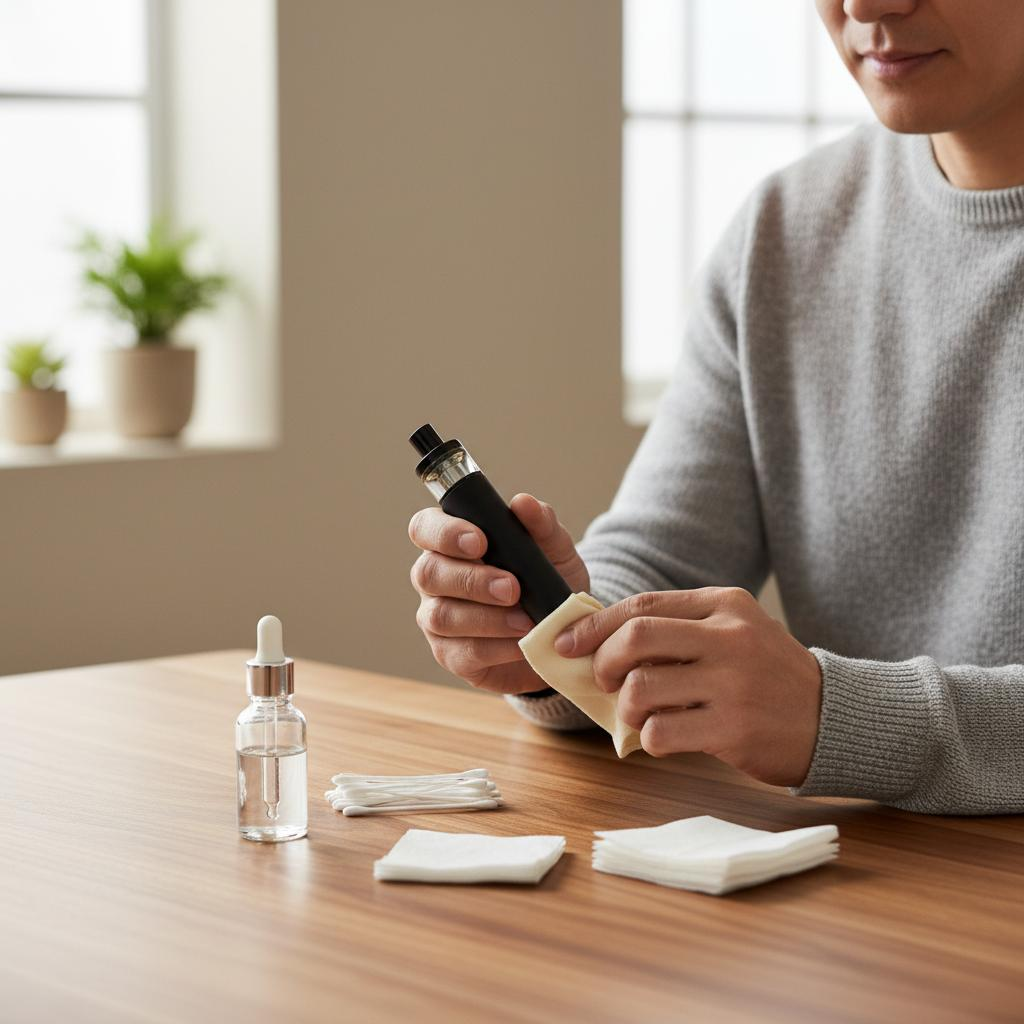
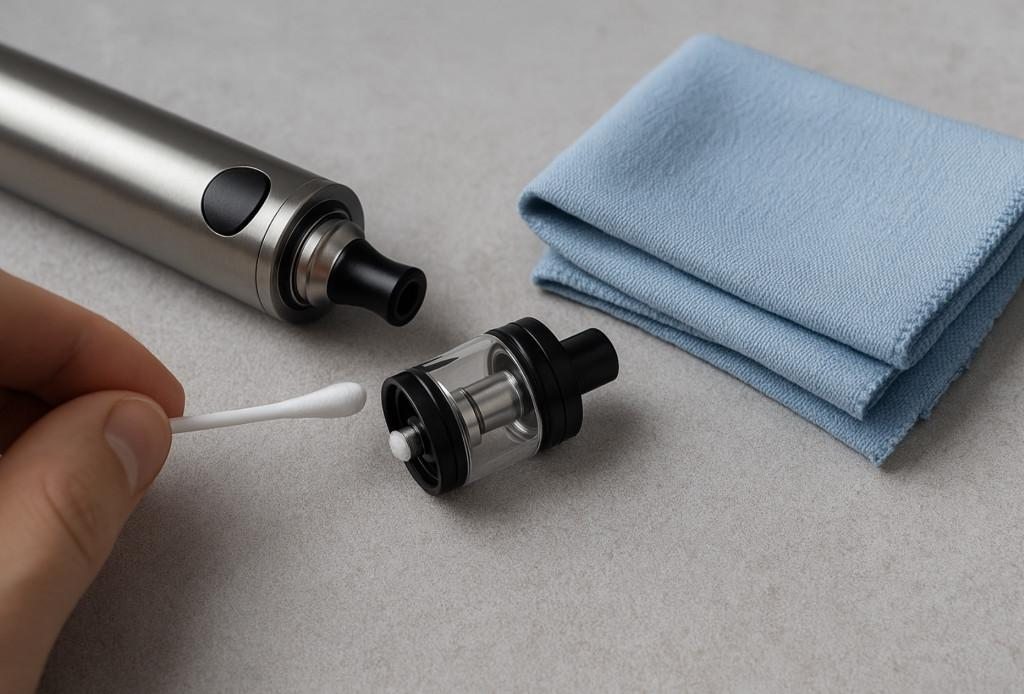
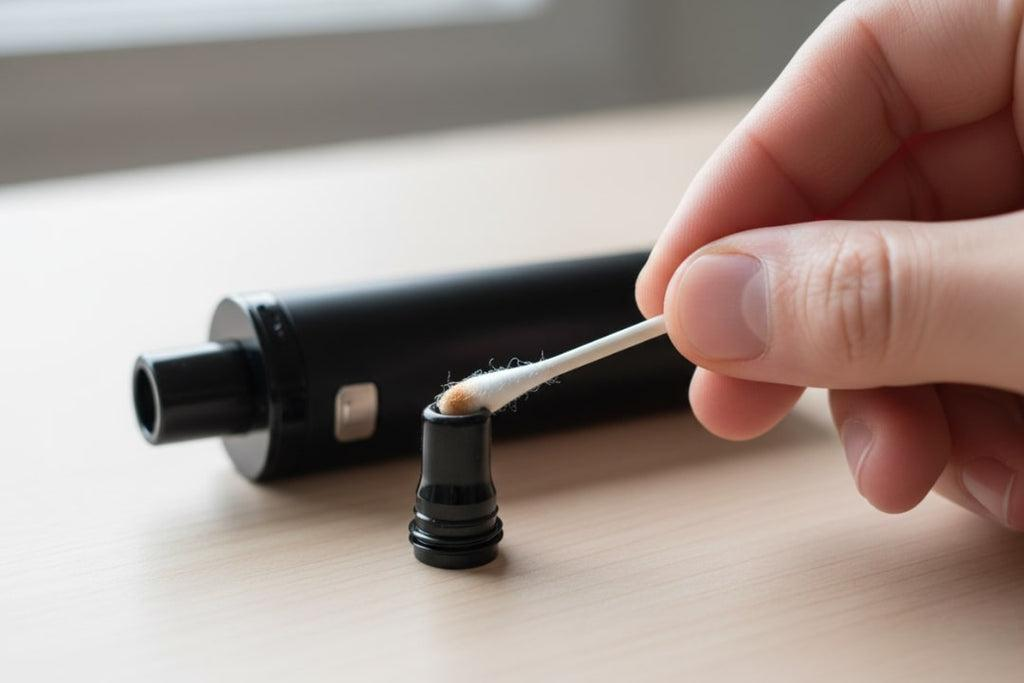
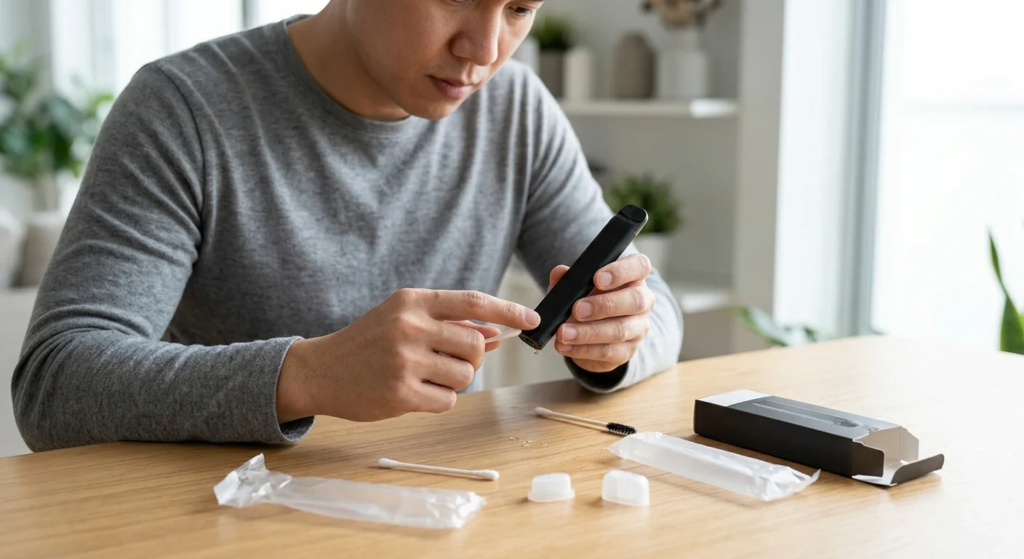
Start with a dry cotton swab to wipe away visible condensation from the interior surface.

Dampen a fresh swab lightly with isopropyl alcohol and gently clean both the inside and outside of the mouthpiece. According to the CDC, isopropyl alcohol concentrations between 60% and 90% are effective for disinfecting surfaces, which is why it’s a common choice for this kind of cleaning.

Let the alcohol fully evaporate before using the device again. This usually takes less than a minute.

Clearing Lint and Fiber Buildup

A toothpick or a clean, unused pin works well for gently clearing lint from the mouthpiece opening. Move slowly to avoid pushing debris further inside.

Avoid using metal objects with sharp edges that could scratch or damage the internal components.

What to Never Do When Cleaning

Never submerge a vape device in water. Water can easily enter the airflow intake or charging port and cause internal damage.

Avoid harsh chemicals like bleach, which can be harmful and may degrade the plastic or rubber components.

Never use the device while it’s still wet from cleaning. Let it dry fully before your next puff.

How to Clean the Mouthpiece: How Often Is Enough

A quick daily wipe is usually enough to prevent significant buildup from forming.

If you notice reduced airflow, a change in flavor, or visible residue, that’s a sign it’s time for a deeper clean regardless of your usual schedule.

How to Clean the Mouthpiece

Signs It’s Time to Replace Instead of Clean

Sometimes cleaning isn’t enough. A few signs suggest replacement is the better option:

  • Persistent burnt taste even after cleaning
  • Visible cracking or damage to the mouthpiece
  • Airflow that stays restricted despite clearing debris
  • Leaking that continues after cleaning
  • A mouthpiece that’s become loose or ill-fitting

Frequently Asked Questions

Can I clean the mouthpiece with just water?
Water alone isn’t very effective at removing oils and residue. Isopropyl alcohol works significantly better for this purpose.

How long should I let the alcohol dry before using my device?
Under a minute is usually enough, but waiting a bit longer doesn’t hurt if you’re unsure.

Is it normal for condensation to build up quickly?
Yes, especially with frequent use. This is a normal part of the vaping process, not a sign of malfunction.

Need a replacement device instead? Get in touch with our team and we’ll help you find the right one.

Why Is My Vape Making Noise

Why Is My Vape Making Noise?

Why is my vape making noise is a common question, and the honest answer is: a little crackling is completely normal. Not all vape sounds mean something is wrong.

This guide breaks down which noises are expected and which ones signal an actual problem worth addressing. If your device turns out to need replacing, our shop has reliable options ready.

Why Is My Vape Making Noise? A Little Crackling Is Normal

A light crackling sound is simply e-liquid vaporizing against the hot coil. This happens in nearly every device, especially with a fresh coil.

Higher wattage devices tend to crackle more noticeably, since they heat the coil faster and produce more vapor per puff.

This kind of sound isn’t a safety concern. It’s the coil doing exactly what it should do.

Why Is My Vape Making Noise

Popping and Spitting Sounds

A popping or spitting sound usually means e-liquid vaporized too quickly at that spot on the coil. This is often linked to power settings.

Surprisingly, this is more commonly caused by wattage that’s too low, not too high. Low power can leave residual liquid unvaporized, which builds up and eventually pops.

Why Is My Vape Making Noise Like Gurgling?

Gurgling is different from a light crackle. It usually means the coil is flooded with more e-liquid than it can vaporize efficiently.

This can happen from overfilling a tank, over-priming a new coil, or using power that’s too low for the e-liquid’s thickness.

If gurgling continues, some liquid may even make it into your mouth during a puff, which is a clear sign something needs adjusting.

What Wattage Has to Do With It

Running a coil below its rated wattage often causes gurgling, since the e-liquid isn’t vaporizing fast enough to keep up.

Running well above the rated wattage can cause sharper, more aggressive crackling and popping instead.

Staying within the coil’s printed wattage range generally keeps noise at a normal, manageable level.

pexels themeditators 23319716 (1)

Why Is My Vape Making Noise After Refilling?

Some crackling or popping right after a refill is expected. The wick is reabsorbing liquid, and a bit of noise during that adjustment is normal.

If the noise continues well past the first few puffs, an oversaturated or flooded coil is the more likely explanation.

When Vape Noise Signals a Real Problem

Occasional light crackling rarely indicates an issue. But a few signs are worth paying closer attention to:

  • Loud, persistent gurgling that doesn’t settle after a few puffs
  • Noise paired with a burnt or off taste
  • Noise accompanied by visible leaking
  • A sudden change in sound from a device that was previously quiet
  • Any noise paired with unusual heat from the device

What to Do About Excess Noise

Try adjusting your wattage slightly, either up or down, depending on whether you’re hearing crackling or gurgling.

Make sure you haven’t overfilled the tank or over-primed the coil with excess e-liquid before use.

If noise continues alongside a burnt taste or leaking, the coil likely needs replacing.

Frequently Asked Questions

Is it normal for a brand-new coil to be noisier?
Yes. New coils often crackle more during the first several puffs as the wick settles in.

Can e-liquid thickness affect how loud my vape is?
Yes. Thinner e-liquids tend to crackle more, while thicker, high-VG liquids are generally quieter.

Should I worry if my vape suddenly gets much louder?
A sudden change is worth investigating, especially if it comes with a burnt taste or leaking.

Dealing with a device that just won’t quiet down? Get in touch with our team and we’ll help you figure it out.

How to Prevent Burnt Hits

How To Prevent Burnt Hits

How to prevent burnt hits comes down to one core principle: keeping the wick saturated before the coil ever heats it. Most burnt hits are avoidable with a few consistent habits.

This guide breaks down exactly why burnt hits happen and what actually stops them. If your current coil is already past saving, our shop has replacement options ready.

How to Prevent Burnt Hits Starts With Understanding the Cause

A burnt hit happens when the coil heats dry cotton instead of e-liquid-saturated wick. The FDA describes this wicking material as the component that carries e-liquid to the heating element.

When there’s not enough liquid reaching that wick, the coil scorches it directly. That’s what produces the harsh, acrid taste vapers dread.

How to Prevent Burnt Hits

Always Prime a New Coil First

A brand-new coil’s wick starts completely dry. Firing it immediately, before it’s had time to absorb e-liquid, almost guarantees a burnt first hit.

Add a few drops of e-liquid directly onto the visible cotton before installing a new coil. Let it sit for several minutes afterward.

Giving the wick time to fully saturate before your first puff prevents most early burnt hit problems.

How to Prevent Burnt Hits by Avoiding Chain Vaping

Taking rapid, back-to-back puffs doesn’t give the wick enough time to reabsorb e-liquid between draws.

Spacing out your puffs by a few seconds allows the wick to stay properly saturated throughout your session.

This single habit prevents a large share of burnt hits, especially during heavier vaping sessions.

Keep Your Tank or Pod Topped Up

Vaping on a nearly empty tank exposes the wicking ports to air instead of liquid. This is one of the most common preventable causes.

Refill before the e-liquid drops below the wick’s absorption points, rather than waiting until the tank runs completely dry.

How to Prevent Burnt Hits With the Right Wattage

Every coil has a recommended wattage range, usually printed directly on it. Exceeding that range vaporizes e-liquid faster than the wick can resupply it.

Staying within the coil’s rated wattage keeps heat and liquid delivery balanced, reducing the risk of scorching the wick.

Match E-Liquid Thickness to Your Coil

Thicker, high-VG e-liquids can struggle to saturate coils with small wicking ports. Thinner e-liquids generally absorb faster.

Check your coil’s design and choose an e-liquid thickness suited to it, rather than assuming any e-liquid will work the same way.

How to Prevent Burnt Hits

Recognize the Warning Sign Before It’s Too Late

A dry hit, a slightly harsh, muted puff, is usually the warning sign right before a full burnt hit.

If a puff tastes even slightly off, stop and let the wick rest for a moment. Continuing through it often finishes the job of ruining the coil.

Frequently Asked Questions

Can a burnt coil be fixed once it happens?
No. Once the wicking material has actually burned, the coil needs to be replaced entirely.

Does cold weather make burnt hits more likely?
Yes. Cold thickens e-liquid, which can slow wick absorption and increase the risk of a dry hit.

How long should I wait after priming a new coil?
Around five to ten minutes is a common baseline, though thicker e-liquids may need slightly longer.

Dealing with a coil that just won’t behave? Get in touch with our team and we’ll help you find a reliable replacement.
Best Disposable Vapes for Travel

Best Disposable Vapes for Travel

Best disposable vapes for travel share a few key traits: compact size, no leaking, and rules that keep you compliant at the airport. Getting this wrong can mean a confiscated device.

This guide breaks down what to look for and the actual rules you need to know before flying. Our shop carries compact devices well-suited to travel.

Best Disposable Vapes for Travel: TSA Rules Come First

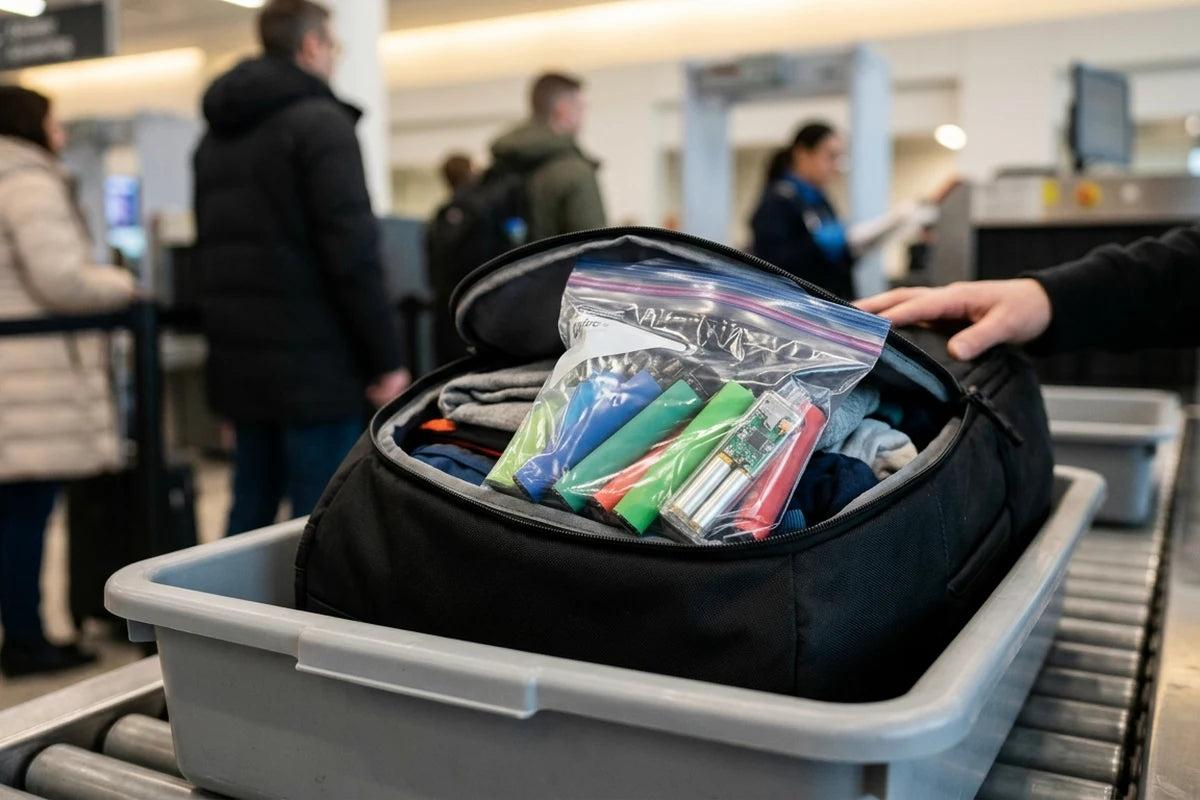
Before picking a device, it helps to know the rule that overrides everything else. According to the TSA, electronic smoking devices are allowed only in carry-on baggage, never in checked luggage.

This applies to every disposable vape, regardless of size or brand. Packing one in a checked bag risks it being removed or confiscated.

The FAA confirms the same requirement, noting that spare lithium batteries must also stay in carry-on baggage, individually protected against short circuits.

Best Disposable Vapes for Travel

Why This Rule Exists

The concern is battery safety, not the device itself. A damaged or overheating lithium battery in a checked bag has no one nearby to respond quickly.

In the cabin, crew can react immediately to a battery issue. That’s the core reasoning behind the carry-on-only requirement.

Compact Size Matters for Travel

A smaller, lighter device packs easily and rarely shifts or takes damage in a carry-on bag.

Slim, pocket-sized disposables also draw less attention during security screening compared to bulkier box mods.

Best Disposable Vapes for Travel: Avoiding Leaks

Cabin pressure changes during flights can cause e-liquid to leak or seep unexpectedly. This is a common issue travelers don’t anticipate.

A device with a snug seal and upright storage position reduces this risk significantly during a flight.

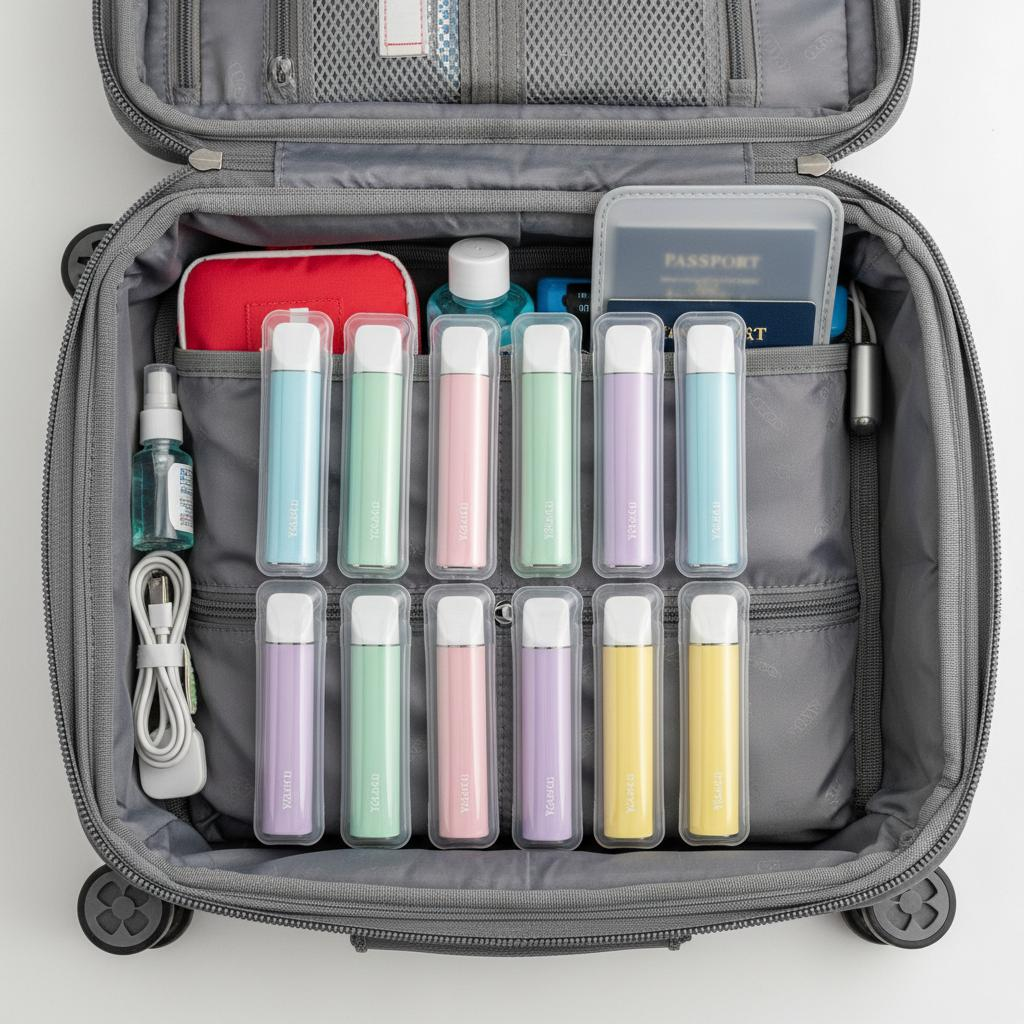
Packing your device in a sealed bag inside your carry-on adds an extra layer of leak protection.

Best Disposable Vapes for Travel

Battery Considerations for Air Travel

Devices with smaller, sealed batteries are generally simpler for travel, since there’s nothing separate to manage.

If you carry a rechargeable disposable, keep any spare batteries individually protected, exactly as the FAA requires for all lithium battery types.

Best Disposable Vapes for Travel: Packing Tips

A few habits make airport security smoother:

  • Keep your device in your carry-on, never checked luggage
  • Store it upright to reduce leak risk
  • Protect the fire button from accidental activation
  • Keep e-liquid bottles under 3.4 ounces if carried separately
  • Have the device easily accessible in case of inspection

International Travel Adds Another Layer

Vaping laws vary significantly by country. Some countries restrict or fully ban vaping products, even for personal use.

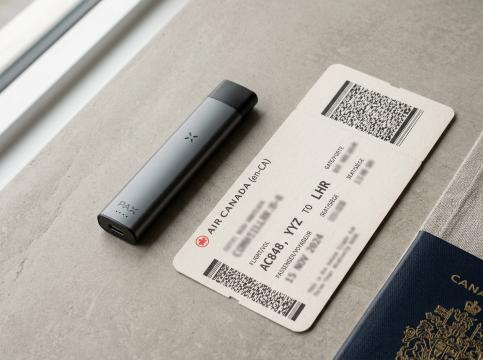
Always check the regulations of your destination country before packing a disposable vape for international travel.

Frequently Asked Questions

Can I bring a disposable vape in my carry-on?
Yes. TSA requires electronic smoking devices to be carried on, not checked, specifically for battery safety reasons.

What happens if I accidentally pack one in checked luggage?
It may be removed by security, potentially delaying your bag or resulting in the device being confiscated.

Are there limits on how many disposable vapes I can bring?
TSA doesn’t set a specific number, but individual airlines may have their own limits worth checking beforehand.

Looking for a compact device that’s easy to travel with? Get in touch with our team and we’ll help you find the right fit.

Choosing Between Brands

Choosing Between Brands

Choosing between brands can feel overwhelming with so many disposable vape options on the market. A few practical checks make the decision much easier.

This guide breaks down what actually separates one brand from another, using real examples to illustrate the differences. Our shop carries a range of established brands to choose from.

Choosing Between Brands: Puff Count Isn’t the Whole Story

Brands market puff count aggressively, but the number alone doesn’t tell you everything. Battery size and e-liquid volume both need to scale together to make that number meaningful.

For example, the WAKA Blast 36000 Puffs pairs its high puff count with a rechargeable battery, which is what makes reaching that number realistic in the first place. A high puff count without a rechargeable design would drain the battery long before the e-liquid runs out.

Battery Type Separates Casual Brands From Heavy-Use Brands

Some brands focus on compact, sealed-battery devices built for occasional use. Others, like WAKA’s higher-capacity lineup, are built specifically for heavy daily use with USB-C recharging.

If you vape occasionally, a smaller sealed-battery device is often simpler. If you vape daily, a rechargeable option better matches how much you’ll actually use it.

Choosing Between Brands

Choosing Between Brands: Format Also Matters

Not every disposable comes in the same format. The Teds Barz 2G Disposable Vape Pen is a larger-format device, distinct from smaller pod-style disposables in both size and e-liquid capacity.

Larger formats generally mean more e-liquid and longer use per device, while smaller formats prioritize portability and a lower upfront price.

Choosing Between Brands: Ingredient and Testing Transparency

Reputable brands are typically clear about e-liquid ingredients and nicotine strength on their packaging. This transparency is a reasonable indicator of manufacturing standards.

Brands that publish or reference third-party lab testing for their e-liquid tend to reflect stronger quality control practices overall.

Flavor Range and Consistency

Some brands specialize in bold, dessert-inspired flavors, while others lean toward simpler, more traditional profiles.

Checking recent customer feedback helps reveal whether a brand’s flavor quality has stayed consistent across different production batches.

Choosing Between Brands

Regulatory Status Is Worth Checking

The FDA maintains a public list of e-cigarette products that have received marketing authorization through its PMTA process.

As of now, most disposable vape brands across the industry, broadly speaking, do not appear on this list. This is an industry-wide pattern, not specific to any one brand.

Checking the FDA’s Searchable Tobacco Products Database can help you understand a product’s current regulatory status if that matters to you.

Frequently Asked Questions

Is a higher puff count always the better choice between brands?
Not necessarily. It depends on whether your usage matches a rechargeable, higher-capacity device or a simpler occasional-use option.

Do larger disposable formats like the Teds Barz cost more?
Generally yes, since more e-liquid and a larger battery add to the overall cost of the device.

Where can I check a brand’s FDA authorization status?
The FDA‘s Searchable Tobacco Products Database lists currently authorized products and is publicly accessible.

Curious how a specific brand fits your habits? Get in touch with our team and we’ll help you compare your options.

What Makes a Good Disposable Vape

What Makes a Good Disposable Vape?

What makes a good disposable vape comes down to a handful of concrete factors, not marketing claims. Flavor, battery performance, build quality, and consistency all play a role.

This guide breaks down what actually separates a well-made device from a mediocre one. Our shop carries devices built around these standards.

What Makes a Good Disposable Vape Start With Ingredients

E-liquid typically contains nicotine, flavorings, and a base of propylene glycol and vegetable glycerin. According to the FDA, these are the standard components found in most vaping products.

Higher-quality e-liquid uses well-balanced ratios of these ingredients. This affects vapor density, throat feel, and how smooth the overall experience is.

Poorly formulated e-liquid can taste harsh or inconsistent, even with a good flavor concept behind it.

What Makes a Good Disposable Vape

Consistent Flavor From First Puff to Last

A good disposable vape tastes similar on puff one hundred as it did on puff one. Flavor degradation over time usually signals lower-quality e-liquid or a failing coil.

Well-made devices are designed so the wick stays saturated throughout the device’s life, keeping flavor steady rather than fading early.

What Makes a Good Disposable Vape: Battery Performance

A good device delivers steady power throughout its use, not just at the beginning. Weak batteries often cause vapor output to taper off before the e-liquid runs out.

Devices with well-matched battery capacity and e-liquid volume tend to perform consistently from start to finish, rather than dying early.

Coil Quality and Vapor Output

The coil determines both flavor intensity and vapor density. Mesh coils generally offer more even heating and fuller vapor than older wire-coil designs.

A well-built coil avoids dry or burnt hits, even as the e-liquid level gets low toward the end of the device’s life.

What Makes a Good Disposable Vape: Build Quality

Solid construction prevents leaks, one of the most common complaints with lower-quality devices. A snug seal around the tank and mouthpiece matters more than it might seem.

A sturdy housing also protects internal components from everyday bumps, drops, or pressure in a bag or pocket.

Clear, Honest Labeling

A good device clearly labels puff count, nicotine strength, and ingredients. This transparency helps you know exactly what you’re buying.

Be cautious of devices with vague or missing information, since this often reflects lower manufacturing standards overall.

What Makes a Good Disposable Vape

Signs You’ve Found a Genuinely Good Device

A few practical signs point to real quality:

  • Consistent flavor throughout the device’s full life
  • No leaking, even after being carried around
  • Steady vapor output that doesn’t fade early
  • Clear labeling of puff count and nicotine strength
  • A comfortable, well-sealed mouthpiece

Frequently Asked Questions

Does a higher price always mean better quality?
Not necessarily, but extremely cheap devices often cut corners on e-liquid quality or coil design.

Can flavor quality vary between devices with the same flavor name?
Yes. Different manufacturers use different formulations, so identical flavor names can taste quite different.

Is puff count the best way to judge quality?
No. Puff count reflects capacity, not necessarily consistency, flavor, or overall build quality.

Looking for a device that delivers consistent quality? Get in touch with our team and we’ll help you find the right one.

High Puff Vs Low Puff

Why Does My Vape Auto Fire?

Why does my vape auto fire is one of the more unsettling problems a vaper can run into. It means the device is producing vapor without you pressing anything.

This guide covers the most common causes, what they mean for safety, and the steps to take if it happens to you. If your device damages, our shop has reliable replacements ready.

Why Does My Vape Auto Fire? What’s Actually Happening

Auto-firing means the heating element activates on its own. No button press or draw ia required to trigger it.

This is different from a draw-activated device working normally. Auto-firing means something internal is sending a firing signal without your input.

It’s not something to ignore. Continuous, unintended heating can drain the battery quickly and generate excess heat.

E-Liquid Leaks Into the Circuit

E-liquid isn’t supposed to reach the internal circuit board or button contacts. When it does, it can create an unintended electrical connection.

That connection can trick the device into thinking it’s being used. This is one of the most common causes of unexpected firing.

Overfilling a tank or storing a device on its side can both increase the chance of this kind of leak.

Why Does My Vape Auto Fire

A Stuck or Damaged Fire Button

Physical buttons can wear down or get sticky over time. Residue from e-liquid or general use can cause this stickiness.

If a button stays pressed even slightly, the device may continue firing without you actively holding it down.

Cleaning the button area regularly helps prevent this kind of buildup from becoming a problem.

Why Does My Vape Auto Fire With a Damaged Battery?

Batteries that are old, damaged, or poor quality can behave unpredictably. Internal damage can sometimes cause a battery to discharge on its own.

According to the Consumer Product Safety Commission, damaged lithium-ion batteries are a known source of short circuits and overheating incidents.

If your battery shows swelling, unusual heat, or physical damage, it should be replaced rather than continued to be used.

Worn or Faulty Coils

Coils naturally degrade with regular use. A coil nearing the end of its life can sometimes send irregular signals back to the device.

This is less common than button or liquid issues, but it’s worth checking if you’ve ruled out the more obvious causes.

Why Does My Vape Auto Fire After Being Dropped?

Physical impact can loosen internal wiring or shift components out of place. This is a common cause of auto-firing in devices that have been dropped.

Even a drop that doesn’t visibly damage the outside can affect the internal connections in a device.

What to Do If Your Vape Starts Auto-Firing

If your device starts firing on its own, stop using it immediately. Move it to a safe, non-flammable surface.

If the battery is removable, take it out right away. If it isn’t, power the device off completely if possible.

Inspect it for leaks, a stuck button, or visible damage before considering whether it’s safe to use again.

When to Replace the Device

If auto-firing continues after cleaning and inspection, the safest option is usually to stop using the device entirely.

A device that auto-fires repeatedly likely has an internal fault that isn’t easily fixed. Replacing it is the safer choice.

Why Does My Vape Auto Fire

Frequently Asked Questions

Is auto-firing dangerous?
It can be. Continuous unintended heating increases the risk of overheating, battery damage, and in rare cases, fire.

Can auto-firing happen with disposable vapes too?
Yes. Disposable devices can auto-fire from the same causes, e-liquid leaks, internal damage, or a faulty sensor.

Should I try to fix a device that’s auto-firing myself?
Basic cleaning and inspection are reasonable, but continued auto-firing usually means the device should be replaced.

Dealing with a device that won’t stop misbehaving? Get in touch with our team and we’ll help you find a reliable replacement.

Back to Top
error: Content is protected !!
Product has been added to your cart
Compare (0)