Home
Shop
Wishlist0
ONE DAY. ONE EXCLUSIVE DISCOUNT. 25% DISCOUNT. EVERY TUESDAY.
vape juice moisture absorption

Vape Juice Moisture Absorption: How Air Affects E-Liquid

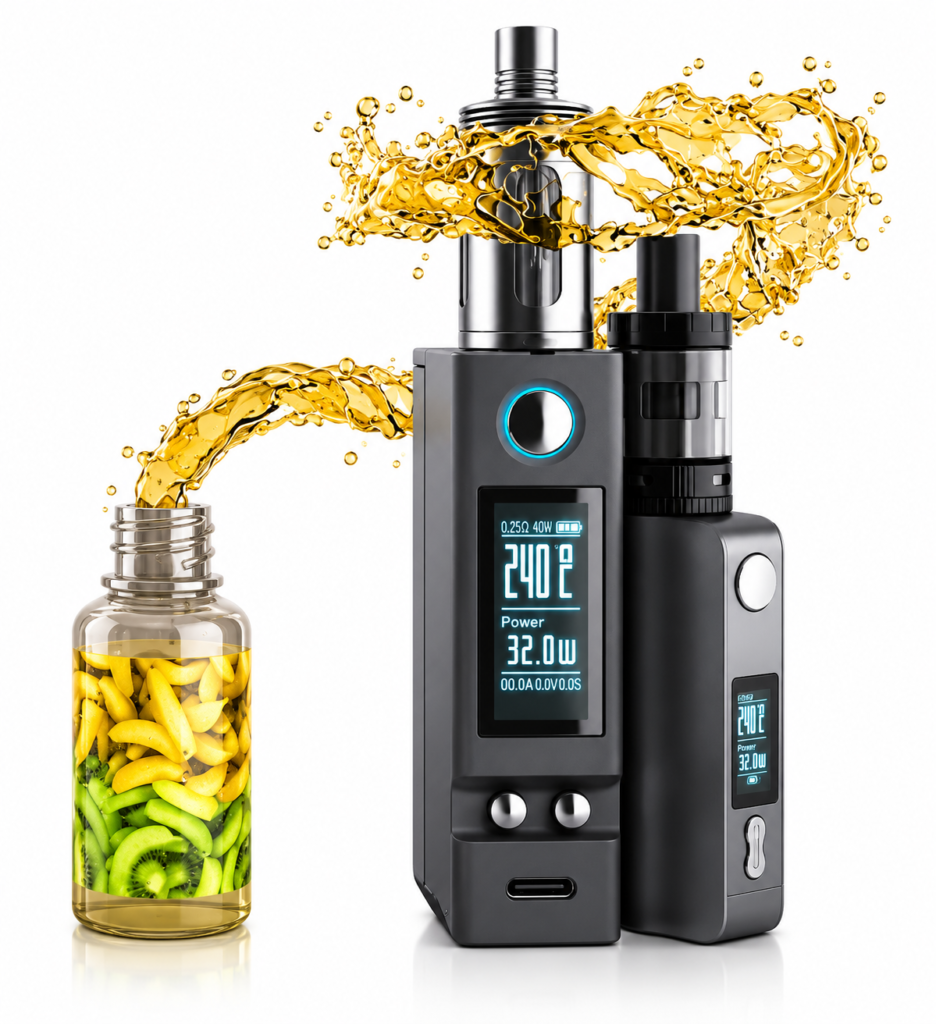
Vape Juice Moisture Absorption occurs because common e-liquid ingredients can attract and retain water from the surrounding air. Propylene glycol (PG) and vegetable glycerin (VG) both have hygroscopic properties. Consequently, prolonged exposure to humid air may affect the liquid’s water content and physical properties. Understanding this process helps explain why proper storage matters.

What Is Vape Juice Moisture Absorption?

Vape juice moisture absorption describes the ability of certain e-liquid ingredients to attract water from the surrounding environment. Scientists call this property hygroscopicity.

Many e-liquids contain PG and VG as their main liquid components. Both substances can interact with moisture in the air. Therefore, an open bottle may experience more exposure to environmental humidity than a properly sealed container.

However, the amount of moisture absorbed depends on several factors, including humidity levels, exposure time, temperature, and the liquid’s formulation.
vape juice moisture absorption2

How Vape Juice Absorbs Moisture from Air

PG and VG have different chemical structures, but both can absorb water from humid air.

Propylene glycol has hygroscopic properties and can attract moisture from its surroundings. Likewise, vegetable glycerin can absorb and retain water. Furthermore, manufacturers use glycerin as a humectant in various products because of its moisture-retaining properties.

These characteristics explain why an e-liquid bottle should remain properly sealed. For more background, see [e-liquid ingredients and chemical composition].

Can Humidity Change E-Liquid?

Yes. High humidity can increase the amount of water that exposed e-liquid ingredients absorb. However, the extent of this change depends on the formulation and surrounding conditions.

Vape Juice Moisture Absorption may influence the overall water content of an exposed liquid. In addition, changes in water content can affect physical properties such as viscosity and the balance between ingredients.

Nevertheless, not every open bottle absorbs a significant amount of moisture. Exposure time, humidity levels, and container design all influence the outcome.

Signs of Moisture Exposure in Vape Juice

Moisture exposure does not always produce obvious changes. However, certain differences may indicate that a product’s condition has changed.

Watch for these possible signs:

  • Changes in consistency: The liquid may become thinner or behave differently.
  • Flavor differences: The original flavor may seem different after prolonged storage.
  • Unusual appearance: Noticeable changes may indicate a storage or product-quality issue.
  • Container problems: A loose cap or damaged seal can increase exposure to air.

These signs do not prove moisture absorption. Other factors, including aging, temperature changes, and ingredient degradation, may also affect e-liquid.
Vape Juice Moisture Absorption

How Air Exposure Affects E-Liquid Storage

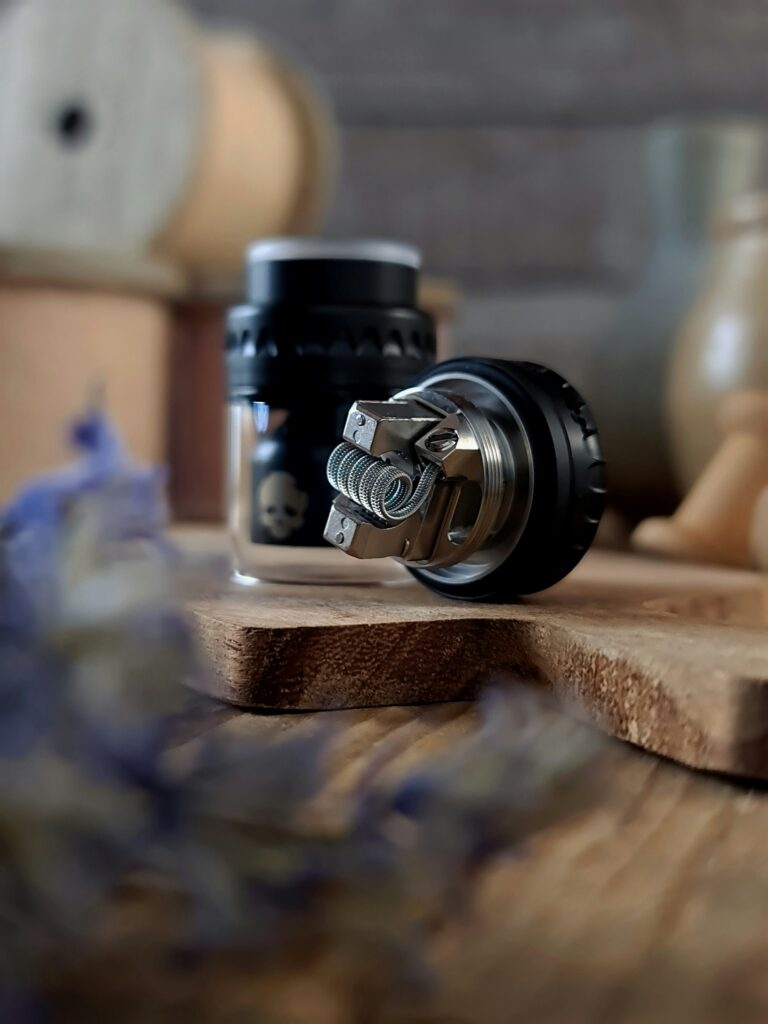
Air exposure allows e-liquid ingredients to interact with environmental moisture. Consequently, leaving a bottle open for extended periods may increase its exposure to humid air.

Furthermore, air, light, and heat can contribute to changes in certain e-liquid components. Therefore, storage conditions matter when considering product stability.

A tightly closed bottle limits direct contact with outside air. However, it cannot prevent every chemical change associated with long-term storage. Review [basic e-liquid storage and handling information] for additional details.

How to Store E-Liquid Properly

Follow the manufacturer’s storage instructions and expiry date. In general, these precautions can help limit unnecessary environmental exposure:

  • Keep the original bottle tightly closed.
  • Store the container away from direct sunlight.
  • Avoid excessive heat and sudden temperature changes.
  • Choose a suitable, dry storage location.
  • Check the cap and container for leaks or damage.
  • Keep e-liquid away from children and pets.

Additionally, avoid transferring e-liquid into unsuitable containers. If the liquid develops an unusual smell, appearance, or consistency, do not use it. Never attempt to correct its condition by adding water or other substances.

Frequently Asked Questions About Vape Juice Moisture Absorption

Does Vape Juice Absorb Moisture from Air?

Yes. PG and VG can attract moisture because they have hygroscopic properties. However, the amount absorbed depends on humidity, exposure time, and formulation.

Does Humidity Affect E-Liquid Quality?

Humidity may change the water content of exposed e-liquid. Other environmental factors, such as heat and light, can also affect product stability.

Can a Sealed Bottle Absorb Moisture?

A properly sealed bottle greatly limits direct exposure to humid air. However, container integrity and storage conditions still matter.

Conclusion

Vape juice contains ingredients that can attract moisture from the surrounding environment. Although this process does not affect every product in the same way, prolonged exposure may change the liquid’s water content and physical properties. Therefore, keep containers tightly closed, follow manufacturer storage instructions, and avoid using products that show unusual changes.
why vape juice browns

Why Vape Juice Browns: Causes of E-Liquid Discoloration

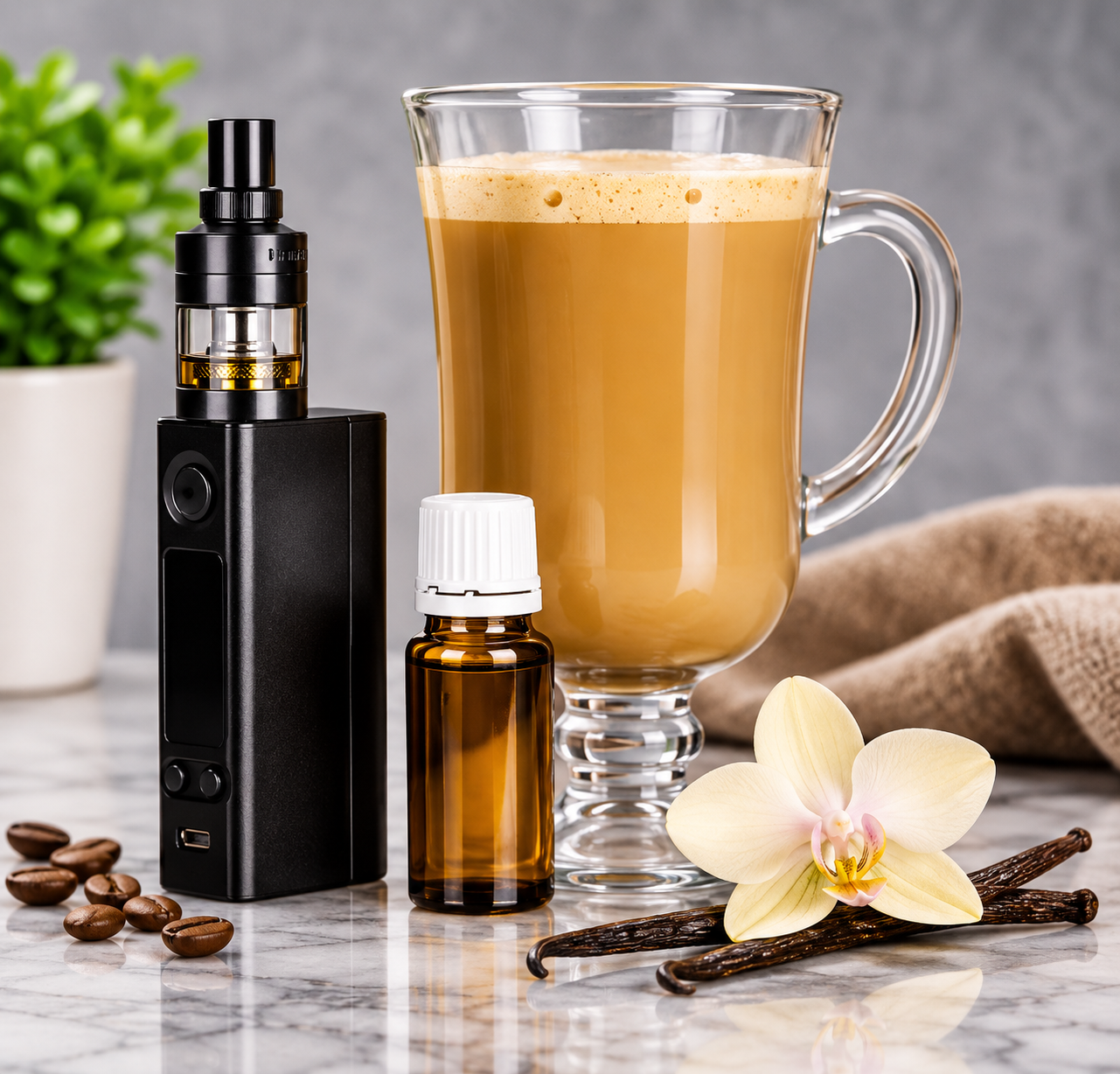
Why Vape Juice Browns is a common question among people who notice their e-liquid changing from clear to yellow, amber, or dark brown. This change can happen during storage, even when the bottle remains unopened. Several factors can affect the liquid’s appearance, including nicotine oxidation, flavoring reactions, heat, and light exposure.

why vape juice browns2

Understanding these causes helps explain why the liquid darkens over time and why color alone cannot confirm product quality or safety.

What Does Fresh Vape Juice Look Like?

E-liquid can have different colors depending on its ingredients and formulation. Some liquids start clear, while others have a naturally yellow, golden, or amber appearance.

However, a noticeable change during storage may indicate that chemical reactions have occurred. For example, a clear liquid may gradually become darker. The speed and extent of this change can vary between products.

Why Vape Juice Browns Over Time

Several chemical and environmental factors can explain why vape juice browns over time. Nicotine oxidation is one possible cause. In addition, certain flavoring ingredients may react with oxygen, light, or temperature.

The original formulation also matters. Different flavoring compounds have different chemical properties. Consequently, two liquids stored under similar conditions may develop different colors.

For more background, see [information about common e-liquid ingredients and formulations].

How Nicotine Changes Vape Juice Color

Nicotine oxidation occurs when nicotine reacts with oxygen. This reaction can produce chemical changes that affect the liquid’s appearance.

As a result, nicotine-containing e-liquid may gradually develop a yellow, amber, or brown shade. Exposure to air can contribute to this process. However, the rate of discoloration depends on several factors, including the formulation and storage conditions.

Research has examined chemical changes in e-liquid during storage. Therefore, oxidation provides one explanation for why some nicotine-containing liquids become darker over time.

Can Flavorings Affect E-Liquid Color?

Yes. Flavoring ingredients can also contribute to discoloration. Some flavoring chemicals may change when they encounter oxygen, light, or higher temperatures.

Furthermore, different flavor formulas contain different chemical compounds. This means one flavor may darken faster than another, even when both products have similar nicotine concentrations.

A 24-month study of e-liquid flavoring chemicals also examined their stability during storage. Its findings highlight why storage conditions matter when assessing changes in appearance.

The Effects of Heat and Light

Heat and light can influence the stability of e-liquid ingredients. For instance, leaving a bottle in direct sunlight or a hot environment may encourage certain chemical reactions.

Meanwhile, cooler and darker storage conditions may help limit some changes. However, proper storage cannot prevent every chemical reaction.

For additional information, see [general guidance on safe storage and handling practices].

Does Darker Vape Juice Mean Expiry?

Not necessarily. A darker appearance alone does not prove that an e-liquid has expired. Some products naturally change color as their ingredients react during storage.

However, appearance cannot confirm whether a liquid remains suitable for use. Always check the manufacturer’s expiry information, storage instructions, and product condition.

If the liquid develops an unusual smell, unexpected separation, damaged packaging, or other unexplained changes, do not assume it is suitable for use. Contact the manufacturer when its condition is uncertain.

Recommended Storage Conditions

Correct storage can help reduce unnecessary exposure to conditions that may affect e-liquid. Follow the manufacturer’s instructions and consider these general precautions:

  • Keep the bottle tightly closed.
  • Store it away from direct sunlight.
  • Avoid prolonged exposure to heat.
  • Keep the original product label intact.
  • Follow the manufacturer’s storage guidance and expiry information.
  • Keep e-liquid away from children and pets.

Furthermore, avoid leaving bottles in vehicles or other places where temperatures can change significantly.

Frequently Asked Questions About Vape Juice

Can Nicotine Cause Discoloration?

Yes. Nicotine oxidation can contribute to yellow or brown discoloration. However, flavoring reactions and storage conditions may also affect the liquid’s appearance.

Can This Happen in a Sealed Bottle?

Yes. Chemical changes can occur inside a sealed bottle over time. Therefore, an unopened container does not guarantee that the original color will remain unchanged.

Is Darker Liquid Safe to Use?

Color alone cannot establish safety or quality. Check the expiry information and manufacturer’s guidance. If you cannot confirm the product’s condition, avoid using it and contact the manufacturer.

why vape juice browns3

Conclusion

Vape juice can turn brown because of nicotine oxidation, flavoring reactions, heat, and light exposure. Although gradual darkening may occur during storage, it does not automatically indicate expiry. Therefore, checking product information and following the manufacturer’s storage instructions remain important.

e liquid color changes

E-Liquid Color Changes: Why Vape Juice Darkens Over Time

E-liquid color changes can happen during storage, even when a bottle remains unopened. A clear liquid may gradually turn yellow, amber, or brown as its ingredients react to light, air, and temperature. However, the color alone cannot confirm whether an e-liquid is safe or suitable for use. Understanding the possible causes helps explain why these changes occur.

What Are E-Liquid Color Changes?

E-liquid color changes refer to visible differences in a vape liquid’s appearance during storage or over time. For example, a liquid that starts clear may gradually develop a yellow, golden, or brown shade. These changes can result from chemical reactions involving nicotine, flavoring ingredients, and other components.

In simple terms, color changes may indicate that some ingredients have reacted or changed during storage. However, the appearance does not reveal the complete chemical condition of the liquid.

e liquid color changes2

Why Does E-Liquid Change Color Over Time?

Several factors can affect e-liquid color. The most common include exposure to air, light, heat, and changes in the liquid’s ingredients.

Furthermore, the original flavor formula can influence how quickly a liquid changes appearance. Some flavoring compounds react differently during storage. As a result, two e-liquids stored under similar conditions may develop different shades.

For more background, see [the ingredients commonly used in e-liquid formulations].

How Nicotine Oxidation Changes E-Liquid Color

Nicotine oxidation is one possible reason an e-liquid becomes darker. This process occurs when nicotine reacts with oxygen and forms different chemical compounds.

Consequently, a liquid containing nicotine may gradually change from clear to yellow or brown. A published study observed a clear-to-yellow color change in a reference e-liquid during storage. However, the researchers noted that further work was needed to understand the chemical changes and their effects.

Therefore, nicotine oxidation can help explain some color changes, but it is not the only possible cause.

e liquid color changes

Can Flavorings Cause Color Changes?

Yes. Flavoring ingredients can also affect the appearance of e-liquid over time. Certain compounds may react with light, temperature, or other ingredients in the mixture.

A 2025 study examined e-liquid flavoring stability over 24 months. It found that several flavoring chemicals were less stable under ambient light and temperature conditions. The researchers also observed visible darkening in stored liquids.

In addition, the original flavor formulation can influence the final color. This means different flavors may change appearance at different rates.

How Light and Heat Affect E-Liquid Storage

Light and heat can influence chemical stability during storage. For example, prolonged exposure to sunlight or high temperatures may speed up certain reactions within an e-liquid.

Meanwhile, a bottle kept in a dark, temperature-controlled environment may experience fewer storage-related changes. Research also suggests that reduced light exposure and cooler storage conditions can help preserve some flavoring chemicals.

For related information, see [proper storage and handling considerations for liquid products].

Does Darker E-Liquid Mean It Has Expired?

Not necessarily. A darker appearance does not automatically confirm that an e-liquid has expired. Some changes may occur naturally as ingredients react over time.

However, color alone cannot establish product quality or safety. Check the manufacturer’s expiry information, packaging instructions, and product condition. If the liquid has an unusual smell, unexpected separation, damaged packaging, or an unknown storage history, do not assume it remains suitable for use.

How to Store E-Liquid Correctly

Appropriate storage can help limit unnecessary changes in e-liquid appearance. Follow the manufacturer’s instructions and consider these general precautions:

  • Keep the bottle tightly closed when not in use.
  • Store it away from direct sunlight.
  • Avoid prolonged exposure to high temperatures.
  • Use the original container where possible.
  • Keep the product away from children and pets.
  • Follow the stated expiry date and storage guidance.

Furthermore, avoid transferring e-liquid into unlabelled containers. Proper packaging helps maintain product identification and handling information.

Frequently Asked Questions About E-Liquid Color Changes

Is it normal for e-liquid to turn yellow?

A gradual yellow color can occur during storage. Nicotine oxidation and changes involving flavoring ingredients may contribute to this appearance. However, yellowing alone does not confirm that the liquid is safe or unsafe.

Can e-liquid change color in a sealed bottle?

Yes. A sealed bottle can still experience chemical changes over time. Its ingredients may react during storage, even when the container remains closed.

Should dark e-liquid be used?

Do not judge suitability by color alone. Check the product label, expiry information, and storage history. If its condition is uncertain, avoid using it and seek guidance from the manufacturer.

Conclusion

E-liquid color changes can result from nicotine oxidation, flavoring reactions, light exposure, and temperature conditions. Although gradual darkening may occur during storage, appearance alone cannot confirm product quality or safety. Therefore, checking product information and following the manufacturer’s storage instructions remain important.

e liquid freezing and evaporation

E-Liquid Freezing and Evaporation: What Happens Over Time?

E-Liquid Freezing and Evaporation are two processes that can affect the condition of vape liquid. Cold temperatures may make e-liquid thicker, while exposure to air, heat, and light can contribute to changes during storage. Understanding these effects helps readers recognize changes in liquid appearance, flavor, and flow.

e liquid freezing and evaporation2

E-Liquid Freezing and Evaporation: Does E-Liquid Freeze?

E-liquid commonly contains propylene glycol (PG), vegetable glycerin (VG), flavorings, and sometimes nicotine. These ingredients behave differently at low temperatures. Therefore, the exact freezing behavior depends on the mixture.

Many e-liquid products become thicker in very cold conditions without freezing into a solid block. However, cold exposure can still affect the liquid. A thicker mixture may move more slowly through a device and may not reach its heating element as expected.

How E-Liquid Freezing Affects Liquid Thickness

Cold temperatures can increase the viscosity of e-liquid. Viscosity describes how easily a liquid flows. As the liquid becomes thicker, it may move less freely through narrow channels or absorbent materials.

This change can affect how a device delivers liquid to its heating element. If the element does not receive enough liquid, the device may produce an unusual or burnt taste. In addition, very low temperatures can affect the performance of a device’s battery.

If e-liquid becomes cold, allow it to return to room temperature naturally. Do not use a microwave, boiling water, or direct heat to warm it. Also, avoid using liquid from a damaged or leaking container.

E-Liquid Evaporation: Does It Happen Over Time?

Yes. Some components of e-liquid can evaporate, especially when the bottle remains open or its seal does not work properly. However, evaporation is not the only process that can change e-liquid during storage.

Different ingredients have different volatility levels. As a result, some components may escape more readily than others. A tightly closed bottle helps reduce this loss, although it cannot prevent all changes associated with aging.

Flavor compounds may also break down over time. Research has examined how light and room-temperature storage can affect the stability of certain flavoring chemicals. Therefore, a change in flavor may reflect chemical changes rather than evaporation alone.

E-Liquid Freezing and Storage Conditions

E-liquid freezing and evaporation can affect the liquid in different ways, depending on its ingredients and storage conditions. Cold temperatures may increase thickness, while poor sealing can allow volatile components to escape.

Furthermore, air, heat, and light may contribute to chemical changes. These conditions can affect flavor and overall product quality. Consequently, proper storage plays an important role in maintaining the original condition of e-liquid.

What Causes E-Liquid to Change Over Time?

Several factors may affect e-liquid while it sits in storage:

  • Air exposure: An open or poorly sealed bottle allows more contact with air.
  • Light: Direct sunlight may affect the stability of some ingredients.
  • Heat: High temperatures can contribute to faster chemical changes.
  • Storage time: Flavor and composition may change as the product ages.

Consequently, e-liquid may develop a different color, smell, or taste. These changes do not confirm a specific chemical reaction. However, an unusual change is a reason to check the product label and avoid using liquid that appears compromised.

How Proper E-Liquid Storage Prevents Changes

Follow the manufacturer’s storage instructions and expiry date. In general, keep e-liquid in its original, tightly closed container. Store it away from direct sunlight and sources of heat.

Furthermore, keep e-liquid out of reach of children and pets. Do not leave bottles in hot vehicles or near heating equipment. If a bottle leaks, becomes damaged, or develops an unusual appearance or smell, do not use its contents.

Frequently Asked Questions About E-Liquid Freezing and Evaporation

Can E-Liquid Freeze in a Household Freezer?

Some mixtures may become very thick in a household freezer without freezing solid. The result depends on the ingredients and the temperature.

Does E-Liquid Evaporate in a Sealed Bottle?

A good seal reduces evaporation. However, some chemical changes may still occur during storage, including changes to flavor compounds.

Can Frozen E-Liquid Change Its Flavor?

Cold temperatures can affect liquid thickness and flow. However, a change in flavor may also relate to aging, air exposure, or other storage conditions.

Conclusion

Cold temperatures can make e-liquid thicker and affect how it flows. Meanwhile, evaporation may occur when a bottle remains open or has a poor seal. E-liquid can also change during storage because of exposure to air, light, heat, and time. Keep products sealed and follow the manufacturer’s storage guidance. If the liquid develops an unusual appearance, smell, or taste, do not use it.

why does my vape taste like chemicals.

Why Does My Vape Taste Like Chemicals

If you are wondering, why does my vape taste like chemicals, the cause may involve an overheated coil, a dry wick, contaminated e-liquid, or a damaged device. However, an unusual chemical taste does not reveal exactly what is causing the problem. Therefore, you should stop using the vape until you identify a possible fault and check the manufacturer’s safety instructions.

why does my vape taste like chemicals..3

Why Does My Vape Taste Like Chemicals

A chemical-like taste can indicate a problem with the e-liquid, heating system, pod, or another device component. For example, an overheated coil may produce a harsh or burnt flavour. Likewise, damaged materials or an unusual product odour may affect the taste.

However, taste alone cannot identify a specific chemical or confirm whether exposure is harmful. For that reason, do not continue vaping to see whether the flavour disappears. Instead, stop using the device and investigate the problem safely.

Common Causes of a Chemical Taste

1. An Overheated Coil or Dry Wick

The coil heats e-liquid to create vapour, while the wick supplies liquid to the heating area. However, when the wick lacks enough liquid, the coil may overheat and produce an unpleasant taste.

This problem may also create a burnt, sharp, or irritating flavour. If you notice these changes, stop using the device and follow the manufacturer’s guidance. Do not continue inhaling vapour from a device that tastes unusual.

2. Damaged or Faulty Device Components

A cracked pod, damaged seal, or malfunctioning heating component may affect how the device operates. Consequently, you might notice an unusual smell, leaking liquid, or a change in flavour.

Check the exterior for cracks, melting, leaks, or other visible damage. However, avoid opening sealed components or attempting electrical repairs. Contact the manufacturer if you suspect a defect.

3. E-Liquid Quality or Contamination

E-liquid composition can affect its smell and taste. In addition, an expired, poorly stored, contaminated, or incorrectly labelled product may raise concerns about its quality.

Check the packaging, product label, expiry information where available, and storage instructions. If the liquid smells unusual, has changed unexpectedly, or comes from an uncertain source, stop using it. Do not mix it with another liquid to hide the taste.

4. Incorrect Parts or Device Settings

Some devices require compatible pods, coils, or specific operating settings. Using an unsuitable component or operating the device outside its instructions may affect performance.

Therefore, review the manufacturer’s recommendations for your [vape device types and configurations]. If the device supports adjustable settings, use only the recommended range. Never modify a sealed device to investigate an unusual taste.

Can E-Liquid Cause a Chemical Taste?

Yes, e-liquid can contribute to an unusual taste. Its ingredients, storage conditions, and product quality may affect its flavour. However, a chemical-like taste does not prove that the liquid contains a particular harmful substance.

If the liquid smells or tastes different from when you first opened it, stop using it. Also, check the label and contact the manufacturer or supplier if you have concerns about the product’s condition.

How to Check a Vape That Tastes Like Chemicals

If your vape tastes like chemicals, take these precautions:

  • Stop using the device: Avoid further exposure while you investigate the unusual taste.
  • Inspect the exterior: Look for cracks, leaks, melting, or other visible damage.
  • Check the e-liquid: Review its packaging, label, storage history, and condition.
  • Read the manufacturer’s instructions: Confirm that the device uses compatible components.
  • Avoid unsafe repairs: Do not dismantle sealed batteries or damaged electrical parts.
  • Seek reliable guidance: Contact the manufacturer or supplier if the problem continues.

You can also review relevant [vape product specifications and maintenance information] to understand the intended configuration and care requirements. Nevertheless, product specifications cannot confirm that a faulty device is safe to use.

When Should You Stop Using Your Vape?

Stop using a vape if it produces a persistent chemical taste, smells unusual, becomes excessively hot, or shows signs of damage. Similarly, stop using it if the battery swells, leaks, or behaves abnormally.

Do not charge a damaged device or continue using it to test whether the taste disappears. Instead, follow the manufacturer’s safety guidance and arrange an appropriate replacement if necessary.

If you experience breathing difficulty, chest pain, severe dizziness, or other serious symptoms after vaping, seek prompt medical attention. If you swallow e-liquid or suspect nicotine poisoning, contact a medical professional or poison information service immediately.

why does my vape taste like chemicals..2

Frequently Asked Questions

Why does my vape suddenly taste like chemicals?

A sudden change may relate to an overheated coil, a change in the e-liquid, or a device fault. Stop using the vape and check its condition before considering any further use.

Can a burnt coil taste like chemicals?

Yes. An overheated or dry wick can create a harsh, burnt flavour that some users describe as chemical-like. However, the taste alone cannot confirm the cause.

Is it safe to use a vape with a chemical taste?

You cannot determine safety from taste alone. Stop using the device and seek advice from the manufacturer, especially if the taste persists or the device shows signs of damage.

Conclusion

Why does my vape taste like chemicals? Possible causes include an overheated coil, damaged components, or an issue with the e-liquid. However, the flavour alone cannot identify the source or confirm whether the device is safe. Stop using the vape, check for visible problems, and contact the manufacturer if you suspect a fault.

why does my vape taste like plastic vape

Why Does My Vape Taste Like Plastic

If you wonder, why does my vape taste like plastic, the cause may involve a new device, an overheated coil, a damaged pod, or a problem with the materials inside the vape. However, a plastic-like taste can also signal a device fault. Identifying the cause helps you understand when to stop using the device and check its condition.

why does my vape taste like plastic vape2

Why Does My Vape Taste Like Plastic

A vape may taste like plastic when its heating system, pod, or other components do not work as intended. In some cases, the taste comes from an overheated coil or a dry wick. In other cases, a damaged pod or unusual material odour may cause the problem.

However, you should not assume that a plastic taste is normal. Since you cannot identify the source by taste alone, stop using the device until you can check it safely. If the taste continues, contact the manufacturer or replace the faulty device according to its instructions.

Common Causes of a Plastic Taste

1. An Overheated Coil or Dry Wick

The coil heats the e-liquid to create vapour. However, the wick needs enough liquid to prevent overheating during normal operation.

When the wick runs dry or the coil develops a fault, the vapor may taste burnt, harsh, or unusual. Although users sometimes describe this taste as plastic, the flavor alone cannot confirm the cause.

2. A Damaged Pod or Tank

Cracks, warped plastic, loose fittings, or damaged seals can affect the condition of a pod or tank. Consequently, you may notice unusual smells, leakage, or changes in flavour.

Inspect the device externally without dismantling sealed components. If you notice damage, stop using it and follow the manufacturer’s replacement guidance.

3. A Manufacturing or Material Problem

A new device may have a noticeable odour from its packaging or components. Nevertheless, a strong plastic taste during use should not be treated as something you must tolerate.

If the taste appears from the first use, check the manufacturer’s instructions and contact the supplier. Do not attempt to burn off the taste or modify the device.

4. Incorrect Device Operation

Some devices require specific e-liquid types, compatible pods, or recommended operating settings. Using incompatible parts or operating a device outside its instructions may contribute to poor performance.

Therefore, review the manufacturer’s guidance for your particular [vape device types and configurations]. Avoid changing settings or replacing components unless the device supports those actions.

Does a New Vape Taste Like Plastic?

A new vape may have a mild packaging odour, but a strong plastic, chemical, or burnt taste should not automatically be considered normal. The taste does not reliably identify a particular chemical or prove that the device is safe.

Instead, stop using the vape and check the instructions. If the taste persists, contact the manufacturer or retailer for advice. Do not continue inhaling vapour simply to see whether the taste disappears.

How to Check a Vape That Tastes Like Plastic

If your vape tastes like plastic, follow these basic safety checks:

  • Stop using the device: Avoid further inhalation while you investigate the unusual taste.
  • Check for visible damage: Look for cracks, melting, deformation, or leakage.
  • Review the instructions: Confirm that you use compatible parts and follow the manufacturer’s guidance.
  • Avoid unsafe repairs: Do not open sealed batteries or attempt to repair damaged electrical components.
  • Seek manufacturer guidance: Ask about persistent unusual tastes, defects, or replacement options.

You can also consult relevant [vape product specifications and maintenance information] to understand the device’s design and care requirements. However, specifications cannot establish whether a device with an unusual taste is safe to use.

When Should You Stop Using Your Vape?

Stop using a vape if it produces a persistent plastic or chemical taste, smells unusual, becomes excessively hot, or shows signs of melting or damage. Also, stop using it if the battery swells, leaks, or behaves abnormally.

Do not charge a damaged device or continue using it to test whether the problem disappears. Instead, follow the manufacturer’s safety instructions and seek professional guidance where needed.

Why does my disposable vape feel heavy

Frequently Asked Questions

Why does my vape taste like plastic when it is new?

A new device may have a noticeable odour, but a persistent plastic taste is not something to ignore. Stop using it and ask the manufacturer or supplier for guidance.

Can a burnt coil taste like plastic?

A burnt or overheated coil can produce an unpleasant taste that some people describe as plastic-like. However, taste alone cannot confirm that the coil is the cause.

Should I keep using a vape that tastes like plastic?

No. Stop using it until you identify the problem or receive guidance from the manufacturer. Replace damaged components only as instructed.

Conclusion

Why does my vape taste like plastic? Possible causes include an overheated coil, a dry wick, a damaged pod, or a manufacturing problem. However, the taste alone cannot identify the source or confirm that the device is safe. Stop using the vape, check for visible damage, and contact the manufacturer if the problem continues.

Why Is My Vape Making A Popping Sound?

Why Is My Vape Making a Popping Sound?

You press the fire button, take a gentle draw, and suddenly hear a loud pop or crackle from your tank. If you are asking why is my vape making a popping sound, you are not alone.

Hearing a sharp popping noise can be startling when you expect a smooth vapor draw. In most cases, a soft crackle simply indicates that your heating element is working properly. However, sudden loud pops or liquid droplets spraying into your mouth mean liquid is boiling on the coil rather than vaporizing cleanly.

Understanding why these sounds happen helps you fix the underlying issue quickly. This guide explains the primary causes behind coil noise and how to restore a quiet, comfortable session.

The Physics of Coil Vaporization

Vape coils work by rapidly heating e-liquid held inside a cotton wick. When electricity surges through the metal wire or mesh, it instantly turns the surrounding liquid into aerosol.

During normal operation, tiny vapor bubbles form and collapse continuously along the surface of the hot metal. This rapid bubble creation produces a light, gentle crackling sound that signals good heat transfer.

Problems occur when excess liquid pools on top of the heating wire. Instead of vaporizing smoothly, the trapped liquid boils and expands into larger bubbles. When these massive bubbles burst open under pressure, they create the distinct popping sound you hear during a hit.

Why Is My Vape Making a Popping Sound: Oversaturated Wicks and Tank Flooding

Why Is My Vape Making a Popping Sound?

The most frequent culprit behind aggressive popping is an oversaturated wick or a flooded atomizer chamber.

When too much e-liquid enters the coil housing, the heating element becomes completely submerged. The coil cannot reach its ideal vaporizing temperature fast enough to convert all that fluid into smooth mist.

Tank flooding can happen for several simple reasons:

  • Overfilling the reservoir past its max fill line.
  • Leaving your device sitting unused for several days.
  • Pulling too hard on the mouthpiece, which pulls extra liquid into the chamber.
  • Damaged rubber O-rings that break the internal vacuum seal.

To clear a flooded coil, flick your device downward toward a paper towel to remove excess liquid from the central chimney. Check our selection of replacement pods in our shop if damaged seals continue to cause persistent leaking.

Low Wattage and Power Settings

Running your device below its recommended power range often leads to noisy vaporization.

Every commercial coil is designed to operate within a specific wattage window stamped right on its metal housing. If you set your battery output too low, the coil warms up slowly.

Instead of turning e-liquid into vapor on contact, the weak heat boils the juice slowly. This slow stewing process generates large, noisy bubbles that pop loudly when you inhale.

Check the side of your installed coil head for its rated wattage. Increasing your power setting by 2 to 5 watts can instantly stop unwanted noise.

Why Is My Vape Making a Popping Sound: E-Liquid Viscosity and PG/VG Ratios

Why Is My Vape Making a Popping Sound?

The ratio of Propylene Glycol (PG) to Vegetable Glycerin (VG) directly impacts how juice flows through your wick.

PG is thin and watery, while VG is thick and viscous. If you use a thin e-liquid with high PG content in a high-power sub-ohm tank, the fluid saturates the cotton far too quickly.

This rapid oversaturation floods the heating element and causes persistent spitting.

Guideline: Sub-ohm coils with wide airflow vents require thick 70VG/30PG blends to maintain proper wicking pressure. Smaller low-power pod systems perform best with balanced 50VG/50PG blends.

Switching to a thicker e-liquid formula prevents rapid flooding and significantly reduces popping noise. Explore our flavor collection to find high-VG options suited for high-wattage tanks.

How to Prevent Coil Popping and Spitback

You can eliminate unwanted tank noise and hot spitback with a few simple habit adjustments:

  1. Inhale Softly: Take longer, gentler puffs rather than sharp, fast draws that drag excess liquid into the chimney.
  2. Clean the Chimney: Swab the central airflow tube with a twisted tissue to clean out trapped condensation.
  3. Fire Before Inhaling: Press the activation button for half a second before drawing to burn off pooled surface liquid.
  4. Use Proper E-Liquid: Match thin liquids with small pod devices and thick liquids with sub-ohm tanks.

If you tried these adjustments and still experience harsh burning or popping, reach out to our team for personalized troubleshooting advice.

For Safety Guidelines, Explore

Why Does My Vape Keep Gurgling After I Clean It?

Why Does My Vape Keep Gurgling After I Clean It?

You just took the time to clean your device, reassemble it, and fill it with your favorite e-liquid. But instead of enjoying a smooth, flavor-packed hit, you’re met with an annoying liquid sound, spitback, or even leakage. If you find yourself asking, “Why does my vape keep gurgling after I clean it?”, you are dealing with a common post-maintenance issue. This usually stems from trapped rinse water, a flooded coil, or improper reassembly. Fortunately, it is easy to diagnose and even easier to fix.

Here is a breakdown of why this happens and step-by-step solutions to restore a silent, leak-free draw.

Trapped Water in the Airflow Track Causing Vape Gurgling

Firstly, when deep-cleaning a tank or pod, it is standard practice to wash the components under running water. However, water has a higher surface tension and a lower vaporization point than e-liquid. If any water droplets remain inside the airflow channel, chimney, or air intakes, liquid gets trapped. This causes a distinct post-cleaning vape gurgle as air passes through.

How to Fix Water Trapped in Your Vape Airflow:

  • Flick the tank: Hold your tank firmly and give it a downward flick over a paper towel. This will force trapped water out through the mouthpiece and airflow vents.
  • Blow through the airflow: Open the airflow fully, wrap a paper towel around the base, and blow firmly down through the drip tip without firing the device.
  • Ensure 100% dry components: Always let non-electronic tank parts air-dry completely on a paper towel for several hours before reassembling.

Water-Thinned E-Liquid Causes a Flooded Vape Coil

Why Does My Vape Keep Gurgling After I Clean It?

Next, if moisture remains inside the coil housing or tank base, it dilutes the vegetable glycerin (VG) and propylene glycol (PG) mixture in your e-liquid. Diluted e-liquid is much thinner. This allows it to oversaturate the wick and flood the chamber faster than the heating element can vaporize it. Thus, resulting in a sputtering, gurgling coil.

How to Fix a Gurgling Vape Coil After Cleaning:

  • Replace water-damaged coils: Replace the coil if it was accidentally soaked in water during cleaning. Standard cotton coils should never be washed with water.
  • Dry the battery contacts: Clean and dry the coil connection area on the mod/battery using a dry Q-tip. This will ensure a clean electrical connection.

Loose Reassembly Leads to Air Leaks and Vape Sputtering

Again, a loose coil or misaligned O-ring breaks the vacuum seal required for proper e-liquid feeding. When air leaks into the tank chamber, e-liquid flows uncontrollably into the coil atomizer head, leading to flooding, crackling, and heavy gurgling after reassembly.

How to Fix Tank Leakage and Gurgling Vape Noise Issues:

  • Check the O-rings: Ensure all rubber seals and O-rings are intact, uncracked, and properly seated in their designated grooves.
  • Check thread alignment: Ensure the coil and tank sections are screwed in snugly. Avoid overtightening, as it can warp the rubber gaskets.

For Maintenance Techniques And More Troubleshooting help

Flooded Chimney or Drip Tip Causing Spitback and Gurgling

Why Does My Vape Keep Gurgling After I Clean It?

Also, during refilling, e-liquid or leftover rinse water can easily drip directly down the center airflow tube (the chimney). Because air needs to travel freely through this tube, any pooling liquid causes instant popping, spitback, and continuous gurgling.

How to Clear a Flooded Vape Chimney:

  • Swab the center tube: Swab the central chimney using a rolled-up paper towel or cotton swab inserted through the top drip tip.
  • Refill at an angle: Always tilt your tank at a 45-degree angle when refilling to keep liquid strictly within the outer fill ports.

To Learn More About Vape Device Maintenance

Vape Terminology Explained

Vape Terminology Explained

Vape terminology explained simply means breaking down the confusing shorthand into plain, practical language. Knowing these terms makes shopping and troubleshooting far easier.

This guide covers the terms you’ll run into most often, grouped by what they actually describe. Once you know the basics, our shop makes a lot more sense to browse.

Vape Terminology Explained: The Core Hardware

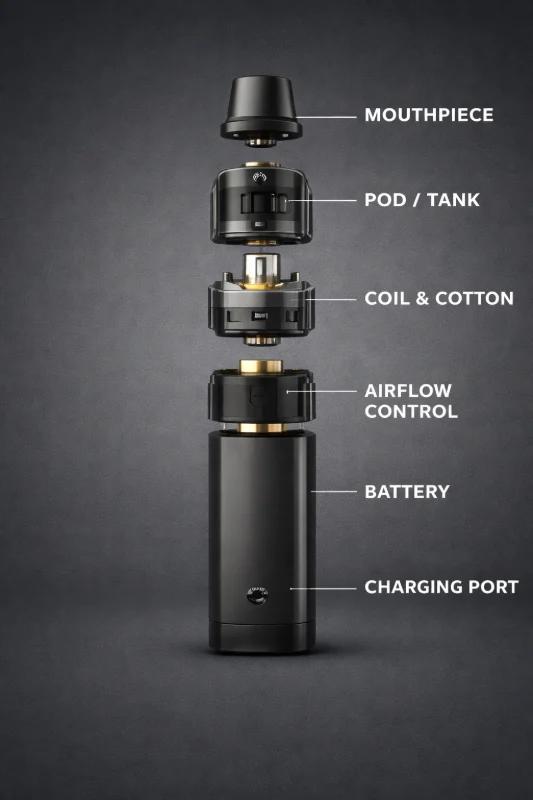
Atomizer refers to the heating component inside a device. It’s what actually turns e-liquid into vapor.

Coil is the wire inside the atomizer that heats up. Most coils are made from metals like Kanthal or nichrome.

Wick is the material, usually cotton, wrapped around the coil. It absorbs e-liquid and feeds it to the coil.

Mod refers to the battery and control unit of a device, often used for larger, more customizable setups.

Vape Terminology Explained

E-Liquid Terms Worth Knowing

PG (propylene glycol) and VG (vegetable glycerin) are the two main base ingredients in e-liquid. According to the FDA, these are standard components found in most vaping products, alongside nicotine and flavorings.

PG generally carries flavor more sharply and produces a stronger throat hit. VG produces thicker vapor and a smoother feel.

Nicotine salt is a form of nicotine that absorbs more smoothly at higher strengths, common in disposable vapes.

Freebase nicotine is the more traditional form, often used at lower strengths due to its harsher feel.

Vape Terminology Explained: Battery and Power Terms

mAh (milliamp-hours) measures battery capacity. A higher number generally means the battery lasts longer between charges.

Ohms measure a coil’s electrical resistance. Lower resistance, often called sub-ohm, produces more vapor and heat.

Wattage refers to the power delivered to the coil. Higher wattage generally means more vapor and a warmer hit.

Vape Terminology Explained

Draw and Inhale Style Terms

MTL (mouth-to-lung) describes a tighter draw, similar to smoking a cigarette. Vapor is held briefly in the mouth first.

DTL (direct-to-lung) describes a looser, airier draw, inhaled straight into the lungs, typically producing bigger clouds.

Auto draw or draw-activated describes a device that fires automatically when you inhale, with no button needed.

Vape Terminology Explained: Common Problem Terms

Dry hit describes a harsh, burnt-tasting puff caused by a coil heating without enough e-liquid present.

Flooding happens when too much e-liquid saturates the coil, often causing gurgling or leaking.

Priming refers to saturating a new coil’s wick with e-liquid before first use, which helps prevent an early dry hit.

Device Type Terms

Disposable refers to a single-use device, pre-filled and pre-charged, discarded once it’s finished.

Pod system uses a small, often refillable cartridge called a pod instead of a full-size tank.

Mesh coil describes a flat, perforated heating element, generally producing fuller vapor than a traditional spiral wire coil.

Frequently Asked Questions

Do I need to know all these terms to start vaping?
No. A handful of basics, like coil, e-liquid, and puff count, are usually enough for casual use.

Is nicotine salt stronger than freebase nicotine?
Not inherently. It simply absorbs differently, allowing higher strengths to feel smoother.

What’s the difference between a mod and a disposable?
A mod is a reusable, customizable device, while a disposable is single-use and pre-configured.

Still running into unfamiliar terms? Get in touch with our team and we’ll help you make sense of it.

How Is Nicotine Strength Measured in Vapes

How Is Nicotine Strength Measured in Vapes?

How is nicotine strength measured in vapes comes down to two formats: milligrams per milliliter and percentage. Both describe the exact same thing, just scaled differently.

This guide breaks down what these numbers actually mean and how to convert between them. In fact, once you understand the math, comparing products becomes much easier. Our shop carries a range of strengths clearly labeled in both formats.

How Is Nicotine Strength Measured in Vapes: mg/mL Explained

Milligrams per milliliter, written as mg/mL, measures how much nicotine sits in every milliliter of e-liquid. For example, a 20 mg/mL liquid contains 20 milligrams of nicotine per milliliter.

This format is common on freebase nicotine e-liquids. Additionally, it has traditionally been the standard labeling method across the industry.

How Is Nicotine Strength Measured in Vapes

Percentage Format Explained

Percentage strength expresses the same concentration differently, based on grams of nicotine per 100 milliliters of liquid.

To convert mg/mL to a percentage, simply divide by 10. For instance, a 20 mg/mL liquid equals 2%, while a 50 mg/mL liquid equals 5%.

To go the other direction, multiply the percentage by 10. Overall, this conversion works the same way regardless of nicotine type.

How Is Nicotine Strength Measured in Vapes for Nicotine Salts?

Nicotine salt e-liquids, common in disposable vapes, often use percentages rather than mg/mL on their labels.

However, the underlying math stays identical to freebase nicotine. In other words, a 5% nicotine salt liquid still equals 50 mg/mL, just expressed differently.

Percentages have become more common as nicotine salt disposables have grown in popularity, particularly at higher strengths.

Why the Two Formats Coexist

Historically, mg/mL was the standard across most e-liquid packaging. Meanwhile, percentages became more common as regulations and higher-strength salt products expanded.

Some regions also favor one format over the other in labeling conventions, which partly explains why you’ll see both used interchangeably today.

Regulatory Limits Vary by Region

The European Union’s Tobacco Products Directive caps nicotine-containing e-liquid at 20 mg/mL, equivalent to 2%, across all member states.

By contrast, the United States currently has no equivalent federal concentration cap. As a result, higher strengths, like 5%, remain more commonly available there.

Therefore, checking your region’s regulations is worth doing if you’re purchasing internationally or making your own e-liquid.

How Is Nicotine Strength Measured in Vapes

How Is Nicotine Strength Measured in Vapes: A Quick Conversion Reference

Use this simple reference to move between formats:

  • 10 mg/mL equals 1%
  • 20 mg/mL equals 2%
  • 30 mg/mL equals 3%
  • 50 mg/mL equals 5%
  • Formula: mg/mL ÷ 10 = percentage, and percentage × 10 = mg/mL

What the Number Doesn’t Tell You

A concentration number describes the liquid itself, not how much nicotine you personally absorb per puff.

Instead, device type, puff duration, and your own habits all affect actual nicotine intake, regardless of the labeled strength.

Frequently Asked Questions

Is 5% the same as 50 mg/mL?
Yes. They represent the exact same nicotine concentration, just expressed in different units.

Does the conversion formula work the same for all e-liquid types?
Yes. The mg/mL to percentage conversion applies equally to freebase nicotine and nicotine salts.

Why do some countries cap nicotine strength at 20 mg/mL?
Regulations like the EU‘s Tobacco Products Directive set this as a maximum concentration for consumer e-liquid products.

So, if you’re still unsure how a specific strength compares to what you’re used to, get in touch with our team and we’ll help you figure it out.

Back to Top
error: Content is protected !!
Product has been added to your cart
Compare (0)