




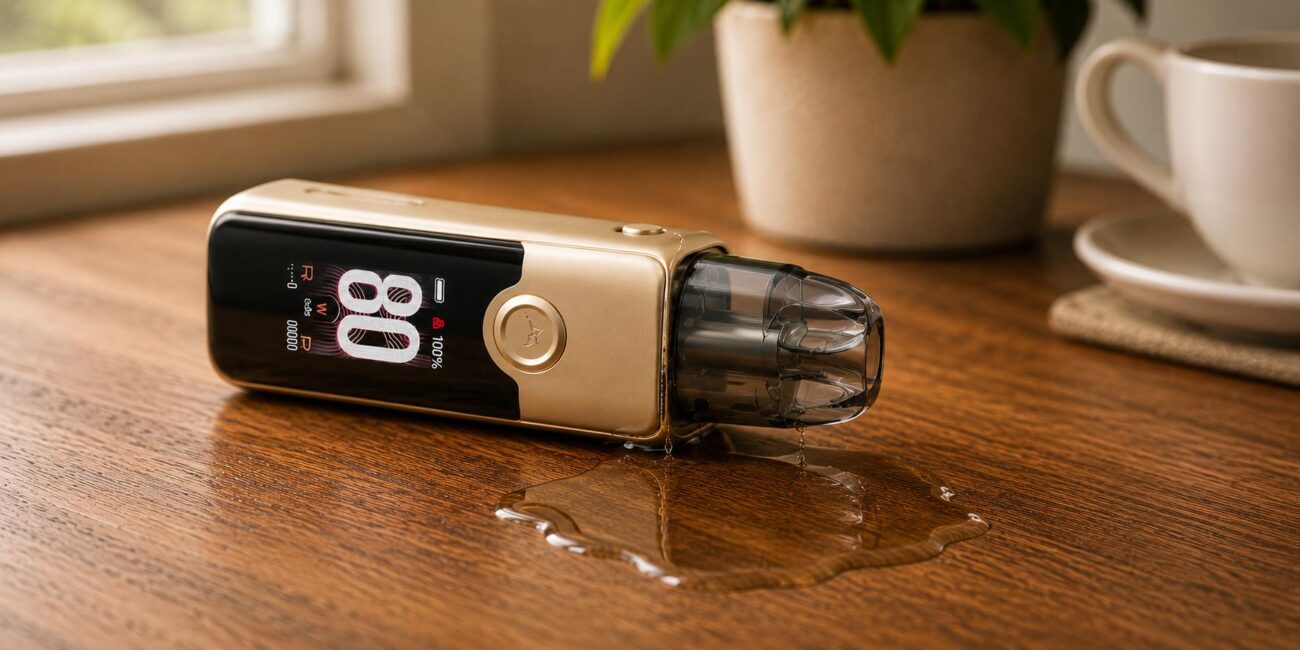
Why does my vape leak after charging? Heat, pressure changes, damaged seals, or excess e-liquid may cause unexpected leakage.
Charging can make existing problems more noticeable, especially when the device becomes unusually warm.
Fortunately, understanding these causes helps you identify the problem and prevent further leaks.
This guide explains why your vape leaks after charging and what you can do about it.
Why Does My Vape Leak After Charging? The Short Answer
Charging generates some heat, which can affect the liquid and pressure inside certain vape devices.
As temperatures rise, e-liquid may become thinner and escape through weak seals or airflow openings.
However, charging alone shouldn’t make a properly functioning vape leak.
Usually, an existing problem with the reservoir, seals, or internal components contributes to the leakage.
How Charging Heat Affects Your Vape
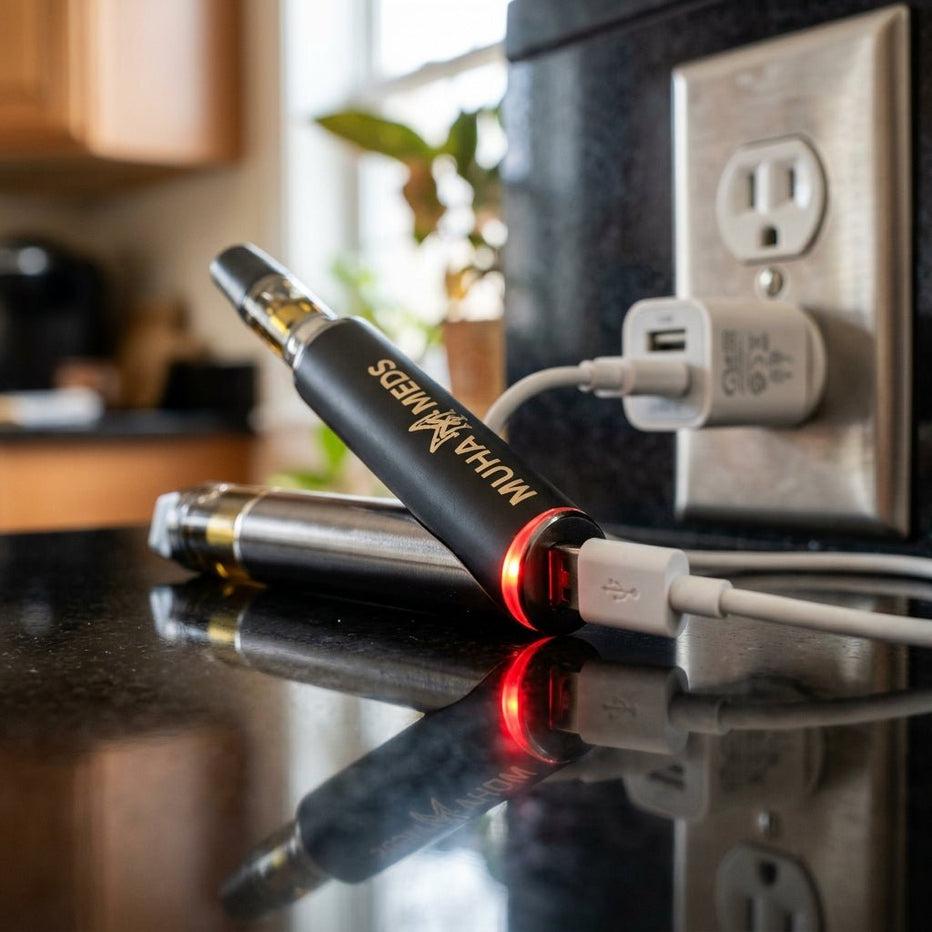
Rechargeable vape batteries generate some heat during charging.
Consequently, the surrounding components may become warmer, particularly when charging conditions are unsuitable.
Higher temperatures can reduce e-liquid viscosity, allowing liquid to move more easily through small openings.
Additionally, temperature changes may affect pressure inside the reservoir.

According to the FDA’s battery safety guidance, users should avoid charging vapes in extreme temperatures.
Therefore, always charge your device in a cool, suitable environment.
Why Does My Vape Leak After Charging From the Mouthpiece?
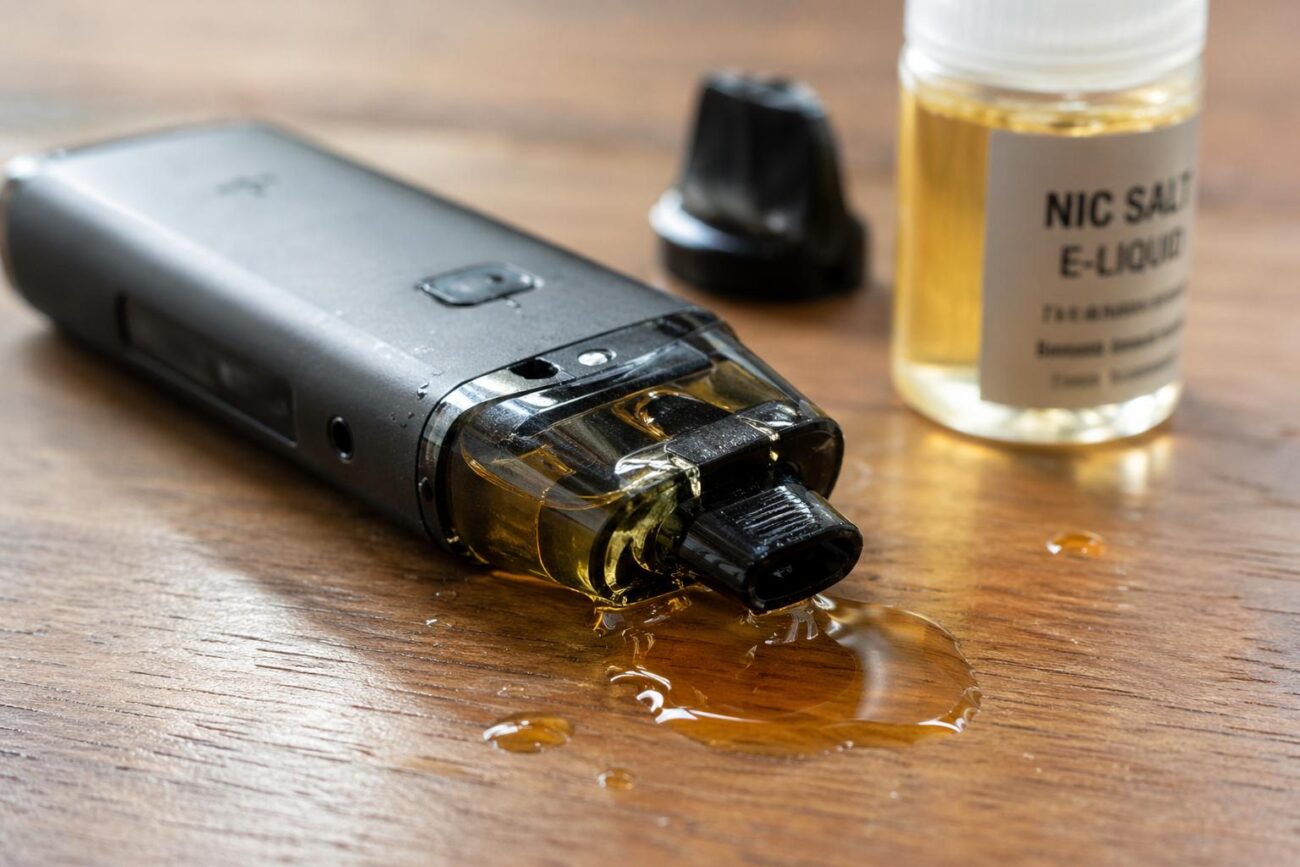
Liquid around the mouthpiece often comes from condensation or excess e-liquid entering the airflow channel.
When vapor cools, small droplets can collect inside the mouthpiece.
Meanwhile, damaged seals or improper storage may allow additional liquid to reach the same area.
Consequently, you might notice leakage immediately after disconnecting your charger.
However, persistent dripping suggests a problem beyond ordinary condensation.
Damaged Seals and Loose Components
Many refillable vapes use rubber seals and O-rings to keep e-liquid inside the reservoir.
Over time, these components can wear out, loosen, or become damaged.
As a result, liquid may escape when temperature or pressure changes occur.
Similarly, a poorly fitted coil or cracked pod can create unwanted openings.
Therefore, inspect accessible components and replace damaged parts according to the manufacturer’s instructions.
Why Disposable Vapes Leak After Charging
Rechargeable disposable vapes contain sealed reservoirs that users generally cannot repair.
If a disposable leaks after charging, internal damage or a defective seal may be responsible.
Additionally, excessive heat can make an existing problem more noticeable.
However, the exact cause depends on the device’s construction.
Never attempt to open or repair a leaking disposable vape.
Instead, stop using it and contact the manufacturer if the problem continues.
Why Does My Vape Leak After Charging Overnight?
Overnight leakage may result from prolonged sideways storage, damaged seals, or changing temperatures.
For example, liquid can gradually escape through a poorly sealed airflow opening.
However, leaving your vape charging overnight also creates unnecessary battery safety concerns.
The FDA recommends avoiding overnight or unattended charging.
Therefore, disconnect your device after charging finishes and store it according to the manufacturer’s instructions.

How to Stop Your Vape From Leaking After Charging
Follow these simple precautions to reduce leakage:
- Charge your vape on a clean, flat surface.
- Avoid direct sunlight and excessive heat.
- Use manufacturer-recommended charging equipment.
- Keep your device upright when recommended.
- Check refillable tanks for damaged seals.
- Avoid overfilling refillable pods and tanks.
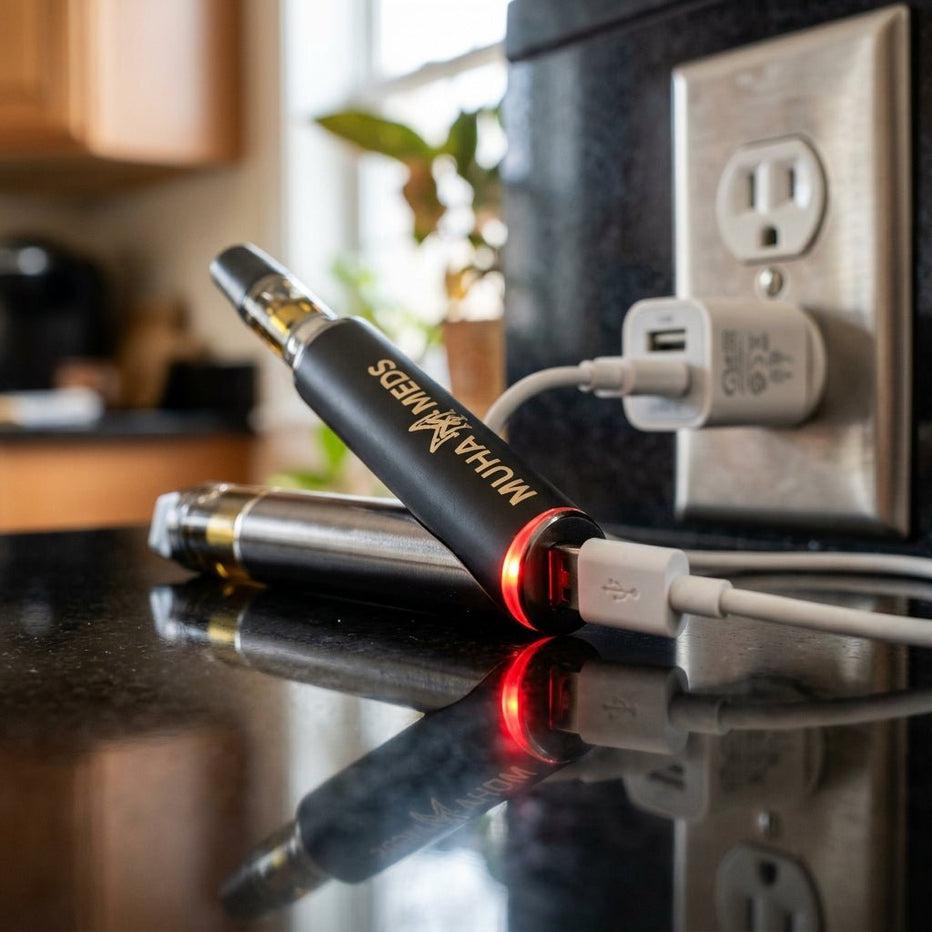
- Never charge a device with liquid inside its charging port.
- Replace damaged components when appropriate.
Additionally, allow your device to cool naturally if it becomes warmer than expected.
If leakage continues, stop charging and contact the manufacturer.
Can a Leaking Vape Damage the Battery?
Yes. E-liquid entering electrical connections may interfere with normal operation and create safety hazards.
The FDA identifies leaking reservoirs and overheating batteries as reportable product problems.
Therefore, never charge a device with visible liquid inside its charging port.
Also, avoid touching spilled nicotine-containing e-liquid.
The FDA recommends cleaning spills immediately and keeping e-liquids away from children and pets.
If your vape becomes excessively hot, swollen, or damaged, discontinue use immediately.
Frequently Asked Questions
Is it normal for a vape to leak after charging?
No. Persistent leakage usually indicates damaged seals, excess liquid, or another device problem.
Does charging make vape juice thinner?
Heat can reduce e-liquid viscosity, although normal charging should not automatically cause leakage.
Why does my disposable vape leak after charging?
Possible causes include internal damage, defective seals, or temperature changes affecting an existing weakness.
Can I charge my vape after it leaks?
Avoid charging if liquid has reached the charging port or electrical components.
Should I replace a vape that keeps leaking?
Yes, if the manufacturer cannot resolve persistent leakage safely.
If you’re still wondering why does my vape leak after charging, inspect the device before attempting another charge.
Persistent leaks may indicate damage that requires professional assistance or replacement.
For further guidance, contact our team for help with product-related questions.
Leave a comment